Train all three glute muscles with varied movements and muscle lengths, and adjust your stance and range of motion to fit your hips.
Glute training works best when you stop picking sides
The useful question isn’t whether squats beat hip thrusts. It’s whether your program trains all three glute muscles, across different movements and muscle lengths. The gluteus maximus gets most of the attention, but the medius and minimus help stabilize the pelvis and control the hip. Neglect them, and you’re leaving part of the job undone. The glutes do more than shape your backside. They help you sprint, jump, change direction, climb stairs, and produce power in rotational movements. That makes glute training relevant well beyond leg day. Here’s the anatomy behind that work: - **Gluteus maximus:** The largest, most superficial glute muscle. It gives the backside much of its size and shape, extends and externally rotates the hip, and can assist with abduction or adduction depending on the fibers and hip position. - **Gluteus medius:** Sits along the side of the pelvis, partly beneath the maximus. It abducts the hip and stabilizes the pelvis; its front fibers can assist with internal rotation, while its rear fibers can contribute to external rotation. - **Gluteus minimus:** The smallest and deepest glute muscle, beneath the medius. It assists with abduction and internal rotation, helps control the femur in the hip joint, and works with the medius to steady the pelvis when one foot leaves the ground.Your hips set the terms
People don’t all squat the same way for good reason. Hip socket depth and orientation, femoral neck angle, femur rotation, mobility, strength, and limb length can all affect which stance and range of motion feel effective. A narrow stance with toes forward suits some lifters; others do better with a wider stance and turned-out toes. Adjust your stance, foot position, and depth until you find a controlled position that loads the glutes well and works with your anatomy. There isn’t one universal setup. That stability matters in everyday movement and training. The smaller glutes help keep the pelvis and lower body steady during walking, running, stair climbing, and single-leg exercises. When that control is lacking, you may notice poor balance, wobbling, or a knee that caves inward. Strong hip extension and hip mobility can also reduce the need for the lower back to compensate. The performance case is just as clear: the glute max drives hip extension in a sprint, while all three glute muscles help control the pelvis when you cut, land, or change direction. They also help transfer force through the body during a bat swing, punch, or golf swing.Train at more than one muscle length
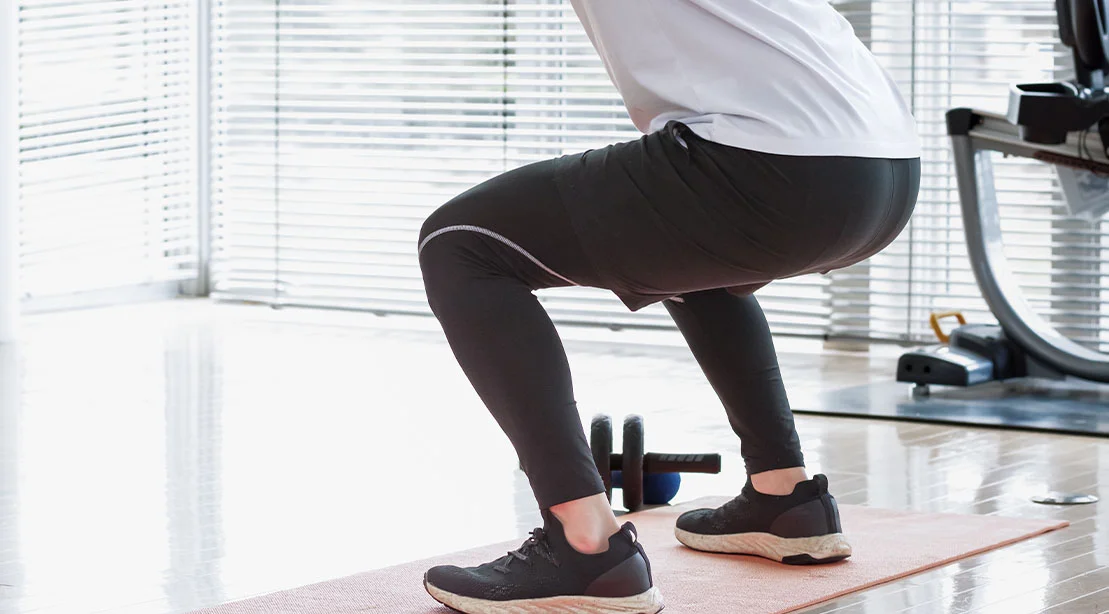
Heavy compound lifts make a solid foundation. Squats, Romanian deadlifts, and barbell hip thrusts let the glutes work with the quads, hamstrings, and adductors. But moving a lot of weight doesn’t guarantee the glutes are doing most of the work; depth, torso angle, hip position, and technique all matter. For work that loads the glutes in a lengthened position, use deep squats, Romanian deadlifts, front-foot elevated split squats, or deficit reverse lunges. A controlled lowering phase can help you own that range. Hip thrusts, glute bridges, and cable kickbacks emphasize hip extension closer to lockout, when the glutes are shorter. Both approaches can build strength and muscle. The point is to include both, use a range of motion you can control, and add load over time. The squat-versus-thrust debate makes for conversation; it doesn’t write your program. Direct hip-abduction work fills another gap. Machines, cable abductions, lateral band walks, and side-lying raises target the medius, minimus, and upper fibers of the maximus. For hip rotation, try seated band internal rotations, cable external rotations, or seated 90/90 rotations while keeping the pelvis and lower back steady. Single-leg work belongs in the mix, too. Bulgarian split squats, single-leg Romanian deadlifts, and step-ups ask each leg to produce force while stabilizing the pelvis. They can build balance and help address side-to-side differences. If athletic power is a goal, broad jumps, sled pushes, hill sprints, and lateral bounds train fast, forceful movement. Mobility is part of the preparation. Half-kneeling hip flexor stretches with a posterior pelvic tilt, adductor rockbacks, 90/90 hip rotations, and prying squats can help you get ready to move through the hip ranges your workout requires.Choose reps and weekly volume you can recover from
Match the training method to the goal: - **Strength:** Use sets of 3–5 on challenging bilateral or unilateral compound lifts. Keep technique and range of motion, and rest at least two to three minutes between sets. - **Muscle growth:** Sets of 6–15 work well for compound movements that train both lengthened and shortened positions. Control the lowering phase, use a full range you can manage, and finish close to technical failure. Growth can occur across a wider range, but this band balances load, effort, and fatigue. - **Power:** Use 3–6 reps, early in the session while fresh. Prioritize speed and movement quality; rest two minutes or longer when needed. - **Medius and minimus:** Try 15–20 reps on abduction exercises. Keep the repetitions controlled, avoid swinging, and progress the load. - **Single-leg stability:** Use 6–12 reps per side. Increase difficulty as strength and balance improve. Treat these weekly set counts as a guide, not a fixed prescription: | Focus | Beginner | Intermediate | Advanced | |---|---:|---:|---:| | Strength | 2 | 4 | 5 | | Muscle and single-leg stability | 4 | 6 | 7 | | Hip abduction | 2 | 2 | 2 | | Power | 2 | 2 | 4 | | **Total weekly sets** | **10** | **14** | **18** | Count each set toward its main programming purpose. A Bulgarian split squat can train strength, muscle, and stability, but the same set shouldn’t be counted three times; for this table, assign it to muscle and stability. Two or three sessions a week is a sensible starting point for most lifters. Beginners can split their work across two days. Intermediate lifters can use two or three, while experienced lifters focused on glute development may spread the work over three sessions to preserve training quality.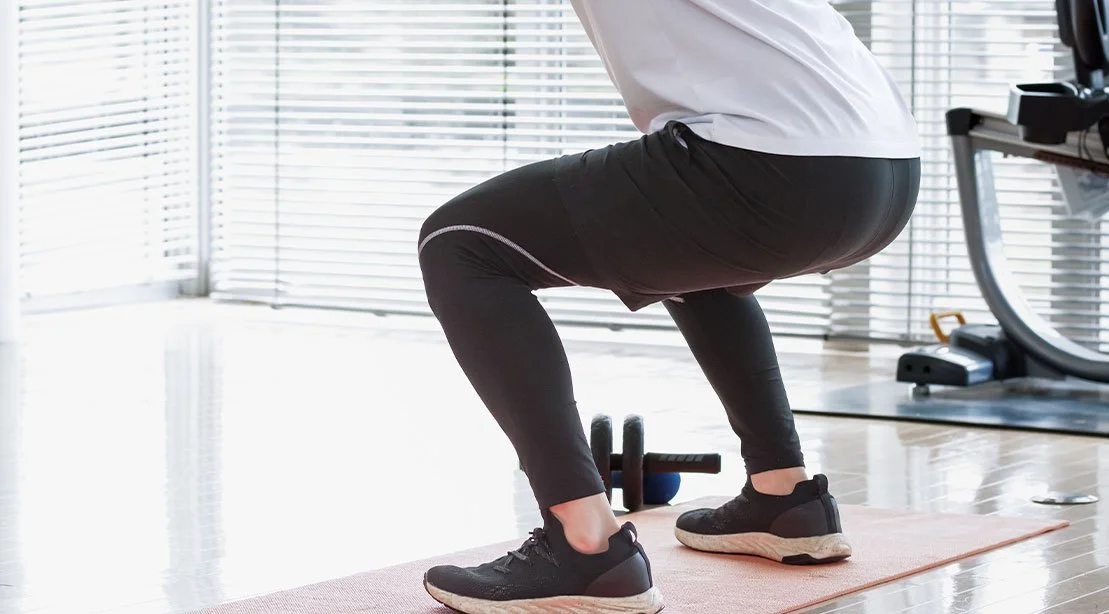
Common shortcuts that leave gaps
Hip thrusts and bridges are useful, but relying on them alone misses loaded stretches, abduction, and stability work. Pair them with Romanian deadlifts, squats, split squats, and direct abduction exercises. The reverse mistake is ignoring lengthened-position work because the lockout squeeze feels more dramatic. Muscle growth isn’t measured by how hard a contraction feels. Include at least one exercise that challenges the glutes with the hip flexed. Watch how you finish hip thrusts, deadlifts, and Romanian deadlifts. Arching the lower back to chase extra range shifts the movement away from the hips. Keep your ribs stacked over your hips, extend at the hip, and stop at lockout. And don’t assume compound lifts cover everything. They involve the medius and minimus, but direct band, cable, or machine abduction gives those smaller muscles more focused work.Four myths worth leaving behind
**“Squats are all you need.”** Squats can load the glutes in a lengthened position, but they don’t train every glute function. Shortened-position work and direct abduction offer different stimuli. **“Hip thrusts beat squats.”** Feeling an exercise more doesn’t prove it produces more muscle growth. Research comparing squats and hip thrusts found that both can build the glutes effectively despite their different mechanics. Preference may help you choose between them, but neither has to carry the whole program. **“You can isolate the upper or lower glutes.”** Different fiber directions and hip positions can shift emphasis toward certain regions. They don’t let you switch one part of the glute max off while training another. It’s much like the debate over upper- and lower-ab training. **“Soreness proves the workout worked.”** Severe soreness can follow a new stimulus or heavy eccentric loading, but it doesn’t reliably measure muscle growth. Walking downstairs in slow motion isn’t a progress metric.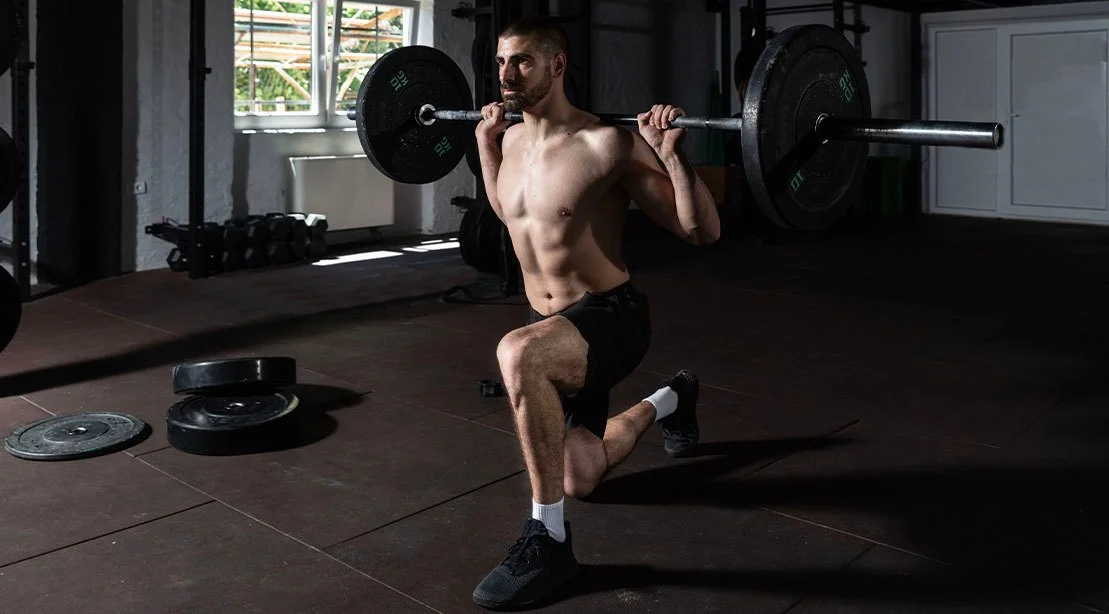
Discussion
Sign in to join the discussion.