Unlock your deadlift potential with five targeted mobility drills that enhance your starting position for improved performance.
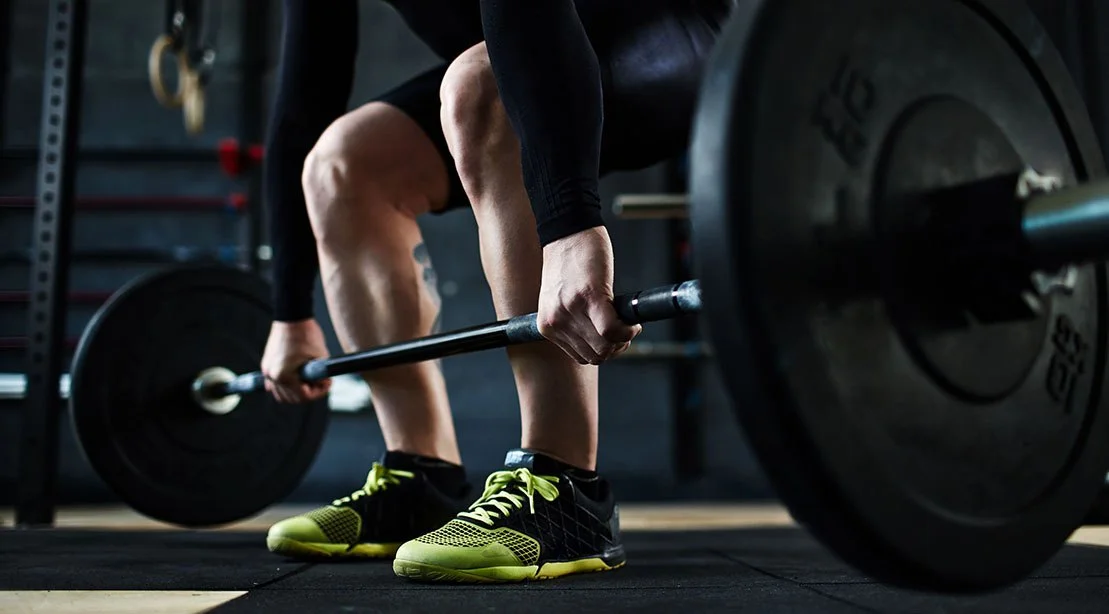
Achieving optimal deadlift performance hinges significantly on getting the starting position right. Often, lifters struggle because of limitations in hip mobility, which can lead to unwanted lower back rounding. Other common issues include starting with hips too low, losing tension in the hamstrings, or allowing the bar to drift. Any of these misalignments complicate an already challenging lift.
For a successful deadlift, it's crucial to possess adequate mobility in key areas: the hips, hamstrings, adductors, ankles, and upper back. But mobility alone won't suffice; effective deadlifting also requires stability and body awareness to maintain tension and ensure a solid starting stance. In this article, we’ll explore five vital mobility moves aimed at enhancing your starting position on the deadlift.
Assessing Your Bottom Position
Begin by loading a barbell with a 45-pound plate on each side and positioning yourself in your deadlift stance with the bar over your midfoot. Hinge at your hips, grip the bar, and emphasize creating tension as if you're ready to lift.
Hold this position for three seconds without executing the lift. During this hold, enlist the help of a lifting buddy to verify the following:
- Are you aware of contact points from your little toe, big toe, and heel?
- Is the bar over the midfoot and close to your shins?
- Is there no excessive rounding in the lower back?
- Are your shoulders positioned slightly in front of or over the bar?
- Do you feel tension in your hamstrings?
- Are your lats engaged, providing upper-back tension?
- Can you maintain the position without making readjustments?
If you can affirm these aspects, you're well-positioned. If not, you've identified specific areas to improve upon.
Key Components for a Successful Deadlift
Various interdependent factors contribute to executing a clean deadlift pull:
Hip Flexion
Effective hip flexion allows the pelvis and torso to transition toward the bar without undue lower back movement. A lack of hip mobility often results in lumbar rounding.
Hamstring and Adductor Mobility
Having adequate length and mobility in the hamstrings and adductors enables you to hinge effectively without compensating, thus positioning the hips optimally while sustaining tension.
Ankle Mobility
Although conventional deadlifts don't require extensive ankle dorsiflexion, your knees still must shift forward enough to bring your shins close to the bar while keeping your feet grounded.
Thoracic Mobility
A mobile upper back is essential to maintain a neutral spine and keep your shoulders properly aligned. A strong upper-back positioning is vital for supporting a neutral spine under load.
Lat Engagement
You've likely heard cues about squeezing your armpits or bending the bar around your shins. These techniques create necessary stiffness to transmit force from your legs through the bar while preventing it from drifting away.
Core and Pelvic Stability
Bracing your core is essential for maintaining alignment through your back and hips while generating force where it counts. Merely having the range to reach the bar matters little if you lose your position before the pull.
Fix Common Deadlift Setup Errors
Sometimes the issue isn't mobility but rather setup errors that need correcting. Here are some common mistakes and how to rectify them:
Squatting Instead of Hinging
Lowering your hips excessively can mimic a squat setup, causing the knees to advance forward and pushing the bar away from the midfoot, which in turn reduces hamstring tension.
Solution: Focus on hinging first. A slight knee bend can be acceptable, but initiate your setup with a hip hinge to engage your hamstrings before the pull.
Rounding the Lower Back
While seasoned competitors may permit some spinal flexion in heavy lifts, most lifters should strive for a neutral spine.
Solution: Enhance your hip mobility while practicing reaching for the bar without rounding your back. Doing blocked or rack pulls can help maintain heavy lifting while working on your mobility.
Hips Too High
Starting with your hips too high can make a conventional deadlift resemble a stiff-leg deadlift, limiting the quads' ability to assist in pulling and disrupting the balance during the lift.
Solution: Refer back to the guidance for squatting your deadlift.
Bar Drifting Away
If the bar drifts from your body, it increases the lifting range. As a general rule, a longer lever demands more effort from your hips and lower back.
Solution: Ensure your bar starts over midfoot, engage your lats, and focus on pulling the bar toward your legs during the lift.
The subsequent mobility drills will help you solidify a powerful starting position for your deadlift.
Five Essential Mobility Exercises
If you're struggling with your starting position, here are five targeted drills to enhance your mobility:
Chair Sumo Deadlift
Strength coach Matt Wenning recommends this effective mobility exercise featuring a wide sumo stance and a chair positioned behind you. “The chair provides a target and teaches you to hinge properly,” Wenning notes.
Benefits: If your hips lack usable range, you may find yourself compensating to reach the bar, ultimately compromising your setup. The sumo stance encourages hip abduction and external rotation.
Instructions:
- Set a sturdy chair behind you and position a loaded barbell in front.
- Sit and select a sumo stance with toes turned out, ensuring the bar is over midfoot.
- Brace your core and align your knees with your toes.
- Grip the bar while keeping your hips positioned properly and your torso braced.
- Create three points of tension through your feet, hips, and upper back, then lift to a lockout position.
- Slowly return to the seated position, reset, and repeat.
Form Tip: Work within the widest stance you can control.
Programming Suggestion: 2-3 sets of 6-10 reps.
Half-Kneeling Hamstring Mobilization with Ankle Rocker
This exercise blends hamstring mobility with ankle dorsiflexion improvement, addressing two critical areas that facilitate easier access to the deadlift bar.
Benefits: Sufficient hamstring length helps maintain a neutral spine while positioning your pelvis for the lift. Ankle mobility also enables shins to advance toward the bar.
Instructions:
- In a half-kneeling position with one foot in front, place one hand on your foot and the other on your thigh to rock forward.
- Shift your hips back, straightening your front leg while keeping your heel down.
- Maintain a long spine while hinging forward until experiencing tension in the hamstring.
- Pause briefly, return to the start, and repeat on each side.
Form Tip: Transition smoothly between positions without forcing end ranges.
Programming Suggestion: 1-2 sets of 6-10 reps per side.
Goblet Prying Squat
This squat variation incorporates a kettlebell, allowing you to spend time at the squat's bottom. By applying pressure from the elbows onto the thighs and gently shifting, you work on mobility in the hips, adductors, and ankles.
Benefits: Effective hip flexion, adductor mobility, and ankle dorsiflexion are all necessary to reach the bar without placing additional strain on the lower back.
Instructions:
- Hold a kettlebell by the horns, positioned close to your chest.
- Stand with a shoulder-width stance and slightly outward-turned toes.
- Squat down, pressing your elbows against your inner knees.
- Gently press outward against your knees while moving side to side.
- Continue for 20-30 seconds before returning to standing.
Form Tip: Shift gradually from side to side, maintaining consistent pressure.
Programming Suggestion: 1-2 sets of a 30-second hold.
Rockback Breathing with Double-Elbow Reach
This mobility and breathing drill aims to alleviate tension in the lats while addressing spinal flexion, enhancing your deadlift starting position.
Benefits: Strong lats are critical, but overactive lats can hinder your ability to get into a good stance. This drill reduces excessive tension, optimizing your position.
Instructions:
- Begin on all fours with knees wider than hip-width.
- Sit back onto your heels, lower onto your forearms with the head between your arms.
- Reach your elbows forward while allowing your spine to round.
- Inhale deeply through your nose, focusing on your upper back, then pause.
- Exhale while pressing your elbows into the ground, arching your spine further.
- Repeat this for five deep breaths.
Form Tip: Focus on breathing deeply into your upper back.
Programming Suggestion: 2 sets of 5 breaths early in your deadlift warm-up.
Straight-Arm Band Pulldown into Deadlift Hold
This exercise combines lat activation with Romanian deadlift (RDL) mechanics to reinforce lat tension before engaging in heavier lifts.
Benefits: This drill not only teaches you to maintain lat engagement but also helps correct setup errors where the bar may drift away from your body.
Instructions:
- Anchor a resistance band above you, grasping it with both hands.
- Step back to create tension in the band while standing tall and engaging your core.
- Pull the band toward your thighs, keeping your arms straight.
- Transition into an RDL while maintaining lat tension and pause at your mobility's limit.
- Hold the position for three seconds, then reset and repeat.
Form Tip: Imagine pulling your armpits toward your back pockets.
Programming Suggestion: 2-3 sets of 5-8 controlled reps, ideal as a warm-up or accessory work.
Final Thoughts
Improving your deadlift often starts with refining your initial position. The above drills specifically target the necessary mobility, positioning, and tension required to access the bar effectively without overburdening your lower back, hips, or knees. Remember, these aren't mobility drills for their own sake; the goal is to find the strongest position for your body structure and build enough stability to maintain it.
Realize that a successful deadlift isn't defined by the bar's movement but rather by the position established before you pull.


Discussion
Sign in to join the discussion.