A small trial linked creatine to higher lean-tissue readings in non-exercisers, but water retention and study design leave the muscle-building claim unresolved.
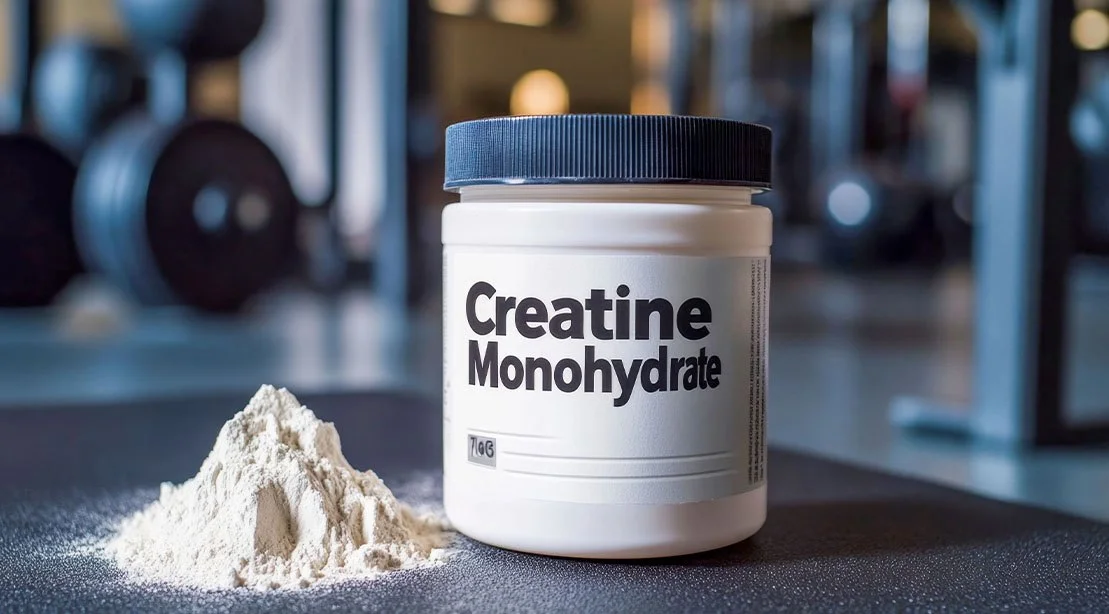
The striking result in a recent creatine study needs a careful reading: sedentary participants who took the supplement showed an increase in lean tissue, but the trial can’t establish that they built new muscle. That distinction matters because body-composition measurements group several kinds of tissue together, and changes in water can affect the reading. Creatine remains well supported as a supplement used alongside resistance training, where it can help people get more from repeated efforts. Whether it can produce meaningful gains on its own is still an open question, and this study doesn’t close it.
What the trial measured
Researchers at Texas A&M published the 12-week study in August in the Journal of the International Society of Sports Nutrition. They recruited 73 sedentary adults aged 45 to 65; 64 completed the trial. Participants chose whether to follow an exercise and diet program. Within each group, researchers randomly assigned participants to take 10 grams of creatine monohydrate daily or a placebo. That design lets researchers compare the supplement with the placebo within each chosen program, but it doesn’t make the decision to exercise random.
Among people who didn’t exercise, the creatine group gained about 2.4 pounds of lean tissue on body-composition scans. The placebo group didn’t show the same increase, and some strength-test results improved in the creatine group. Those findings are interesting, but “lean tissue” doesn’t mean the scans confirmed new muscle protein. The term describes tissue other than fat in the scan’s classification; it doesn’t identify exactly what changed inside that category. A result can be real as a measurement and still leave its biological explanation uncertain.
The researchers used DXA scans, which measure body composition but can’t distinguish newly built muscle from water held in lean tissue. Creatine can increase water stored in muscle, particularly when someone starts taking it. Because the study didn’t directly measure changes in body water, it can’t show how much of the reported gain was muscle. That measurement gap limits the headline interpretation: a rise in lean tissue is not, by itself, proof that creatine built contractile muscle. To answer that more directly, follow-up work would need measurements capable of separating changes in muscle from shifts in water.
Small groups and a self-selected exercise program
The comparison among non-exercisers included only 13 people taking creatine and 13 taking placebo. That’s enough to raise a question, but too small a group to settle it. With so few participants, individual differences can have a larger effect on the group result, and the estimate may be less stable than a reader might assume from the reported average. The supplement assignment was randomized; the choice to exercise wasn’t. Participants decided whether to join the training program, so differences between those who exercised and those who didn’t can’t be read as a randomized test of exercise.
Those who trained combined resistance and aerobic exercise three times a week with a calorie-restricted diet. Creatine users in that group gained nearly three pounds of lean tissue and improved more on several performance measures. The training group’s results can’t isolate the supplement from the exercise and diet program, but the comparison between creatine and placebo within that group is still relevant to how the supplement may work alongside training. That result fits the stronger case for creatine: it may support training, while the study doesn’t show that it can stand in for it.
The researchers also reported changes in memory tests, blood lipids and blood-sugar markers. These results are exploratory, the authors said. The study assessed many outcomes with a relatively small sample, so larger studies will need to determine whether those signals hold up. When a trial measures several outcomes, some apparent differences can emerge by chance; replication helps show which findings are consistent enough to warrant more attention. For now, the secondary results are leads for further research, not established benefits of taking creatine.
Disclosures and dosage in context
A foundation gift funded the study. A creatine manufacturer supplied the supplements and paid for one laboratory assay; the senior researcher disclosed a position on the company’s scientific advisory board. Those disclosures don’t invalidate the findings, but they belong in any account of the research. They give readers useful context for judging the study and underline why methods and independent replication matter when assessing a result with commercial relevance.
The study tested 10 grams per day, a higher amount than the 3 to 5 grams many lifters use as a maintenance dose. Its results don’t establish that 10 grams is necessary for other people or that the dose can replace exercise. Nor can the study’s findings automatically be applied to people with different ages, activity levels or health circumstances; its participants were sedentary adults aged 45 to 65. People with kidney disease or other medical concerns should discuss supplementation with a clinician.
What the result means for future research
My read is that this trial makes creatine without exercise a worthwhile research question, not a settled muscle-building strategy. The lean-tissue increase could partly reflect water, and the non-exercising comparison was small. This is more significant as a prompt for better measurement than as a reason to rewrite the usual account of the supplement. Researchers would need to test the finding in larger groups and distinguish water changes from actual muscle growth before claiming that creatine alone builds meaningful muscle.
If you’re working in this space, the practical question is what a follow-up study measures and how it handles the choice to exercise. A design that tracks body water directly could clarify the scan results, while a larger non-exercising group would give a more dependable estimate of the effect. The exercise finding also deserves careful framing: because participants chose whether to train, the study can’t tell us what would happen if otherwise similar people were assigned to exercise or remain sedentary. And this is the part most people overlook: a promising signal can justify another trial without changing what the current evidence supports.
For now, the clearest takeaway is narrow. Creatine remains better supported as a supplement used alongside consistent resistance training, where the study’s performance results fit its established role. Whether it produces meaningful muscle gains without exercise remains unresolved. A measurement, not a verdict.



Discussion
Sign in to join the discussion.