Industry press releases often promote supplements despite studies showing no benefit or harm, while weak oversight leaves consumers uncertain about what products contain.

Supplement marketing can keep its momentum even when research finds no benefit or signals harm. That gap between evidence and promotion matters in a market where product contents may not match their labels and oversight is stretched across tens of thousands of products.
Research into supplement industry trade group press releases found that every release examined contained “spin”: language or framing that hyped or denigrated clinical findings. More strikingly, releases advocated supplement use in response to more than 90% of studies that reported no benefit or found harm. The pattern is shown below and at 1:24 in Supplementation Regulation and Side Effects: Efforts to Suppress the Truth.
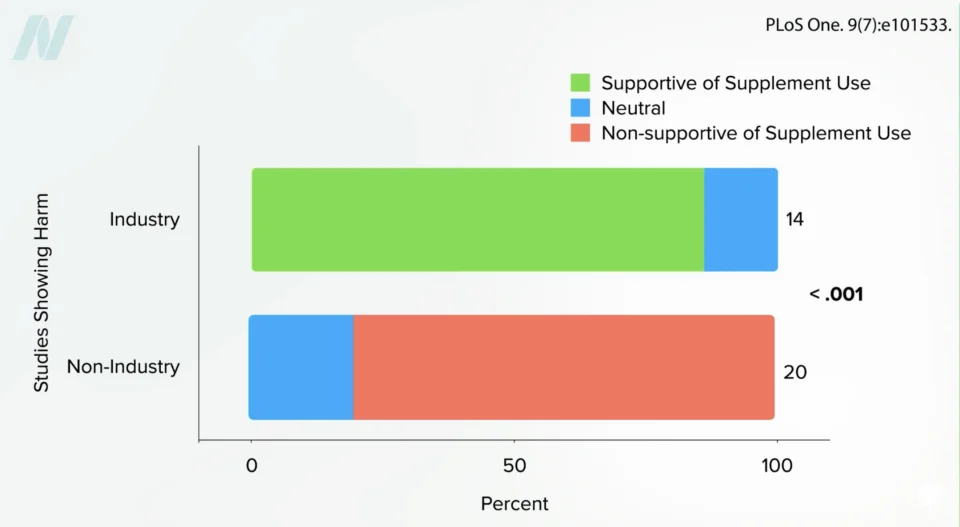
The researchers argued that such releases may help sustain enthusiasm for supplements despite evidence of ineffectiveness and, in some cases, harm. Independent studies may have limited influence, too: most supplement users surveyed said taxpayer-funded research contradicting manufacturers’ claims would affect them only minimally. About one-quarter said they would stop taking a product if public health authorities described it as a waste of money.
A large market with limited checks
The “snake oil salesman” has a real historical counterpart. Clark “the Rattlesnake King” Stanley sold a product that, when examined in 1916, contained no snake oil. It was mostly spicy moth repellent mixed with turpentine. Prosecuted under the Pure Food and Drug Act, he was fined $20.
The modern supplement market operates under laws, but its size makes oversight difficult. The FDA estimates that more than 85,000 dietary supplement products are available in the United States. Researchers point to the volume of products, underreported adverse effects, difficulty prosecuting offenders and the ease of rebranding products removed from shelves as barriers to effective oversight.
That leaves consumers with little assurance that a supplement contains what its label promises—or that it is free of undeclared ingredients. One estimate puts supplement-related emergency room visits at 23,000 a year. Prescription drugs cause far more deaths and injuries, but that comparison doesn’t make preventable supplement harms trivial.
Some supplements are adulterated with undeclared pharmaceuticals. Reports most often identify them in products marketed for erectile dysfunction, weight loss, diabetes and high blood pressure, where hidden drugs can pose a substantial risk. Third-party certification also has limits: the practice known as “dry labbing” involves laboratories approving products with fabricated quality documents.
The BMPEA case and its chilling effect
A dispute over β-methylphenylethylamine (BMPEA), a designer stimulant resembling amphetamine, shows how contentious scrutiny can become. A Harvard researcher published a paper replicating earlier FDA research that detected BMPEA in supplements sold in the United States.
Hi-Tech Pharmaceuticals, which makes weight-loss products including Black Widow and Yellow Scorpion, sued the researcher for libel, slander and product disparagement, initially seeking $200 million in damages. STAT documented the case. The company’s head said he was “hoping that we were able to silence this guy.” Hi-Tech ultimately lost in court, but the lawsuit sent a warning to other researchers. Its CEO reportedly said he hoped the costly legal battle would scare academics away from investigating the industry.
The case is a reminder that checking supplement claims can involve more than comparing labels with published research. Independent scrutiny may face pressure even when researchers are examining ingredients that regulators had already detected.
Doctor’s Note
The video mentioned above is Spin Doctors: How the Media Reports on Medicine.
Related coverage of supplement quality, safety and evidence:
- Dietary Supplement Snake Oil
- Heavy Metals in Protein Powder Supplements
- Some Dietary Supplements May Be More Than a Waste of Money
- Black Raspberry Supplements Put to the Test
- Dangers of Dietary Supplement Deregulation
The medical journalism site referenced above is STAT. For consumers and researchers alike, the central question remains practical: what’s actually in the bottle, and does the evidence support taking it?
===


Discussion
Sign in to join the discussion.