On The Menace Podcast, Dennis James, Jose Raymond and Milos Sarcev argued that easier pro card access may be thinning bodybuilding’s talent pool.
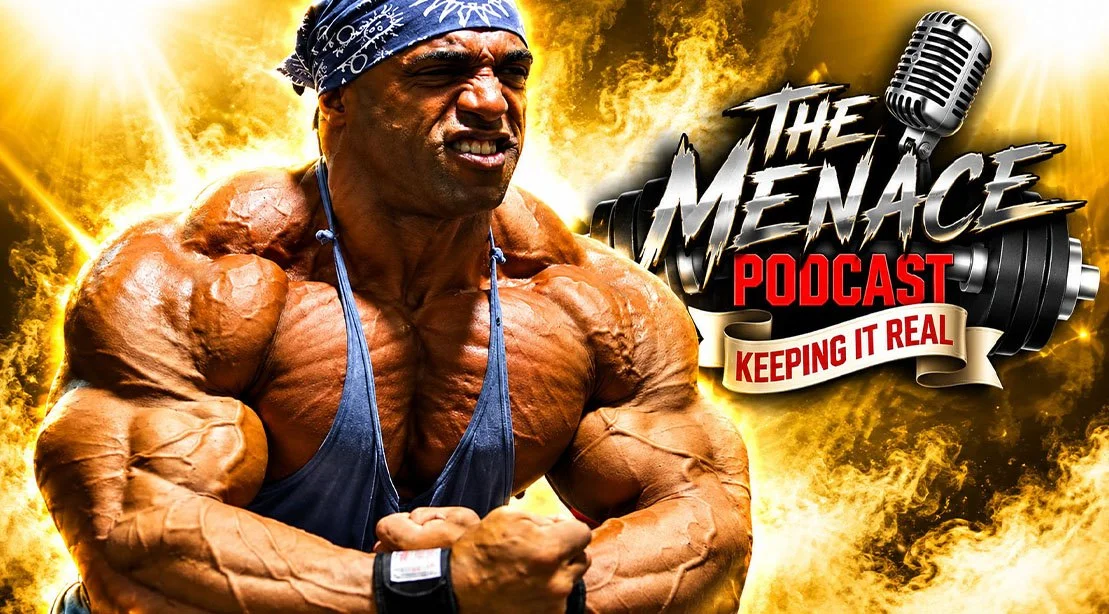
The debate over bodybuilding’s current talent pool starts with a basic question: are competitors reaching the professional ranks before their physiques are ready? On Episode 307 of The Menace Podcast, host Dennis James and guests Jose Raymond and Milos Sarcev compared today’s pros with the larger physiques of the 1990s. Their discussion centered on how long athletes spend developing before they earn a pro card, and what the qualification process says about the depth of competition.
That question is about more than size. A professional credential marks entry into a higher level of competition, but it doesn’t guarantee that an athlete has reached the physical maturity, balance, or stage presence associated with the sport’s most memorable champions. Raymond’s argument is that time spent trying to qualify can itself be part of an athlete’s development. The panel offered opinions drawn from its experience; the conversation doesn’t establish a formal measure of how today’s competitors compare with those of earlier decades.
Raymond, a bodybuilder turned coach, argued that a longer road to a pro card gave athletes more time to mature. “If you have to fight for a pro card, for seven to ten years, by the time you get it you’ll be ready,” he said. “And the physique is going to be already matured and marinated.” He suggested that younger athletes earning cards sooner could leave the current field less developed.
That distinction matters because bodybuilding rewards a physique built over time. A competitor can make rapid progress and still need years to add muscle or bring different body parts into better proportion. Raymond’s point isn’t simply that athletes should wait longer; it’s that the competition required to qualify may force them to improve before they reach the professional stage. Whether every athlete benefits from that longer path is harder to determine from the panel’s discussion alone.
“Most of today’s guys would not win a pro card in 1993, 1989,” Raymond said. The 1990s, often called the “Mass Monster” era, featured champions such as Dorian Yates, Lee Haney and Ronnie Coleman.
That comparison carries weight because the names associated with the era set a demanding reference point for size and muscular development. But comparisons across generations are difficult: athletes compete under the qualification rules, judging expectations, and competitive conditions of their own time. The champions named by Raymond represent a high bar, while his broader claim about today’s athletes remains a judgment rather than a direct, like-for-like contest.
How the panel compares the eras
James backed Raymond’s assessment, estimating that “90% of them, maybe even more than 90%,” of today’s bodybuilders wouldn’t earn a pro card if they competed in the ’90s. Raymond pointed to athletes earning cards with a second-place finish: “You’ve got guys getting a pro card for second place. That’s crazy to me.”
Those comments focus on the number of available routes into the professional ranks. A second-place finish can mean that an athlete has performed strongly in a particular contest, but the panel’s concern is that a card awarded that way may come before the winner-level standard they associate with earlier eras. The distinction is about the threshold for entry, not a claim that every athlete who finishes second lacks professional potential.
James’s percentage is an estimate, and the discussion doesn’t provide a method for calculating it. Still, the estimate makes the panel’s view plain: they believe the gap between qualifying today and qualifying in the past is substantial. This is more significant than it looks, because the number of athletes who qualify affects how people interpret the professional label itself.
Sarcev added a historical measure of how tough the earlier competition could be: respected bodybuilders Edgar Fletcher and Matt Mendenhall never became professionals. Raymond said Fletcher would win pro shows today, a view Sarcev emphatically shared: “One hundred percent.”
The examples sharpen the debate, but they don’t settle it. Fletcher and Mendenhall’s careers illustrate that respected athletes could remain outside the professional ranks; Raymond’s prediction about how Fletcher would fare today is a counterfactual opinion. It can’t be tested by the discussion itself. The point the panel is making is that an athlete’s reputation and ability don’t always translate into a qualification under a particular era’s rules.
What qualification rules signal
James noted that more than 70 athletes have qualified for Olympia categories from a pool of around 500. In several divisions, that route is tightening, with competitors now required to win two shows. The panel’s argument is that the number of available cards shapes the quality of the field; whether stricter qualification raises the standard will become clearer as those rules take effect.
Qualification systems do more than sort athletes into eligible and ineligible groups. They set expectations about what a professional career requires, and they influence how crowded the top tier becomes. If fewer routes are available, each card may carry more weight; if many athletes qualify, the professional ranks may include a wider range of competitive readiness. Neither outcome automatically determines who will become a champion.
And this is the part most people overlook: a tighter qualification process may change who gets through, but it can’t by itself tell us whether those athletes will improve faster, build more complete physiques, or perform better against established professionals. Those judgments require seeing how the competitors develop and how they fare onstage. If you’re working in this space, the practical question is whether the rules are producing a stronger field over time, not merely a smaller list of qualifiers.
Two wins. A higher bar, if the results support it.
What comes next for the debate
The panel’s criticism rests on a reasonable distinction between earning access to professional competition and being ready to contend at its highest level. But the available comments don’t prove that the current talent pool is weaker across the board, or that a longer qualification journey would improve every athlete. They do show how strongly these veterans connect competitive scarcity with maturity and prestige.
As the two-show requirement takes effect in several divisions, future results may offer a clearer basis for judging the change. The relevant evidence will be how the qualifying field compares in performance, not just how many athletes secure a place. That said, the panel’s nostalgia for the 1990s deserves some scrutiny: a celebrated era can provide a useful benchmark, but it can also make the present look deficient by definition.
The full conversation, including discussion of recent bodybuilding news and results, is available on the Muscle & Fitness YouTube channel.



Discussion
Sign in to join the discussion.