Taylor Knibb claimed the 2026 Kona title after last year’s collapse, while defending champion Solveig Løvseth fell in the final mile. Vincent Luis won the men’s race.
Kona’s late race turns
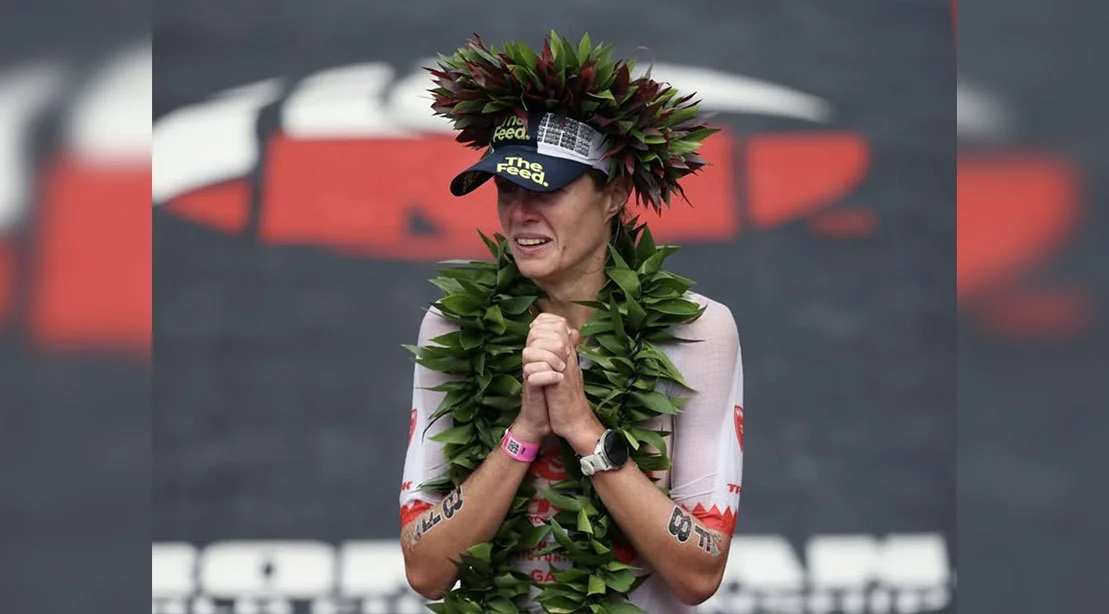
Kona’s 2026 Ironman World Championship came down to a stark test: who could keep moving after more than eight hours of racing. Taylor Knibb won the women’s title in 8:36:29 after defending champion Solveig Løvseth, who’d taken the lead about five miles from the finish, began staggering and fell in the final mile. Løvseth got back up and finished eighth. Germany’s Laura Philipp placed second, followed by Switzerland’s Julie Derron.
The result was decided in a stretch where the order on the course stopped telling the whole story. Løvseth had moved ahead, but a lead that late couldn’t guarantee she’d reach the finish at the same pace. Knibb, meanwhile, had to keep working while the race shifted around her. This is more significant than it looks: in an event this long, a small-looking change in how an athlete is moving can alter the outcome in seconds.
The finish reversed the previous year’s race. In 2025, Knibb led late in the marathon before faltering; Løvseth passed her to win, while Knibb didn’t finish. Twelve months later, Knibb took the title as Løvseth struggled in the closing stretch. The symmetry is striking, but it doesn’t make either athlete’s result a simple story of redemption or resolve. A championship can turn on endurance, conditions, and an athlete’s ability to respond to what’s happening in the moment; the result alone can’t tell us exactly why one runner held on and another didn’t.
A result shaped by the final miles
Knibb had already won the 2026 Ironman 70.3 World Championship, but Kona asks athletes to sustain effort across a 2.4-mile swim, a 112-mile bike ride and a marathon. The difference in distance matters: success at the shorter championship shows form, but it doesn’t settle what an athlete can do over a full Ironman. Løvseth arrived as the defending champion, and both women had the credentials to win. The decisive difference emerged late, when the body’s capacity to continue mattered more than position or reputation.
There’s no confirmed diagnosis in the source for what caused Løvseth to collapse. Heat, hydration, fueling and accumulated exertion are factors people may consider in a race like Kona, but footage alone can’t establish a medical cause. Similar episodes during strenuous exercise can have different explanations, which is why confident claims based on a brief visual record are unreliable. A collapse during exercise can require medical assessment. Calling it a lesson in willpower risks turning a serious event into a slogan.
That distinction matters for how the finish is discussed. Spectators see an athlete fall, stand, and keep going; they don’t see the clinical information needed to interpret the episode. Løvseth’s eighth-place finish records where she ended up, but it doesn’t explain what happened to her or whether pushing on was safe. The race result is clear. The cause isn’t.
Vincent Luis wins on his Kona debut
The men’s championship also produced a late change at the front. France’s Vincent Luis, 37, won in 7:47:27 in his first Kona world championship appearance. An Olympic competitor and world champion at shorter triathlon distances, Luis had discussed retiring before choosing to race in Hawaii. He moved past Denmark’s Magnus Ditlev during the marathon and finished about a minute and a half ahead of former champion Gustav Iden. American Matthew Marquardt took third.
Luis’s win brought together two different parts of his career: success at shorter distances and the challenge of making that experience count over a full Ironman. His first Kona appearance ended with a title, but that single outcome can’t tell us how he’ll approach future races. What it does show is that a reputation built elsewhere in triathlon doesn’t dictate the finish; athletes still have to manage the demands of the day as they unfold.
It was the first time since 2019 that the men’s and women’s professional championships were held together in Kona. Both races turned late, underscoring how little an advantage earlier in the day can guarantee at the finish. Training, nutrition, equipment and preparation for the heat all matter, but none can promise that an athlete’s body will hold up across 140.6 miles. That uncertainty is part of what makes the closing miles so consequential.
What the final mile can tell us
That’s the hard measure of an Ironman: being ahead at mile 139 doesn’t settle the result. Knibb’s win completes a remarkable reversal, while Løvseth’s finish is a reminder that continuing isn’t always the right measure of strength. The final mile can change everything.
And yet, a late swing in the standings shouldn’t be mistaken for a complete explanation. The results establish who won, who followed, and where the leaders changed places; they don’t reveal every decision, physical limit, or medical factor behind those moments. If you’re working in this space, that’s a useful line to keep clear when turning dramatic footage into analysis (and this is the part most people overlook).
For spectators, the finish offers a vivid account of endurance under pressure. For athletes, it’s a reminder that pacing and preparation matter across the whole course, while the final miles can expose limits no earlier split settles. The drama is plain. The causes are harder to know.

Discussion
Sign in to join the discussion.