California families face steep medical bills, while leading governor candidates propose limited details for lowering prices and curbing industry consolidation.
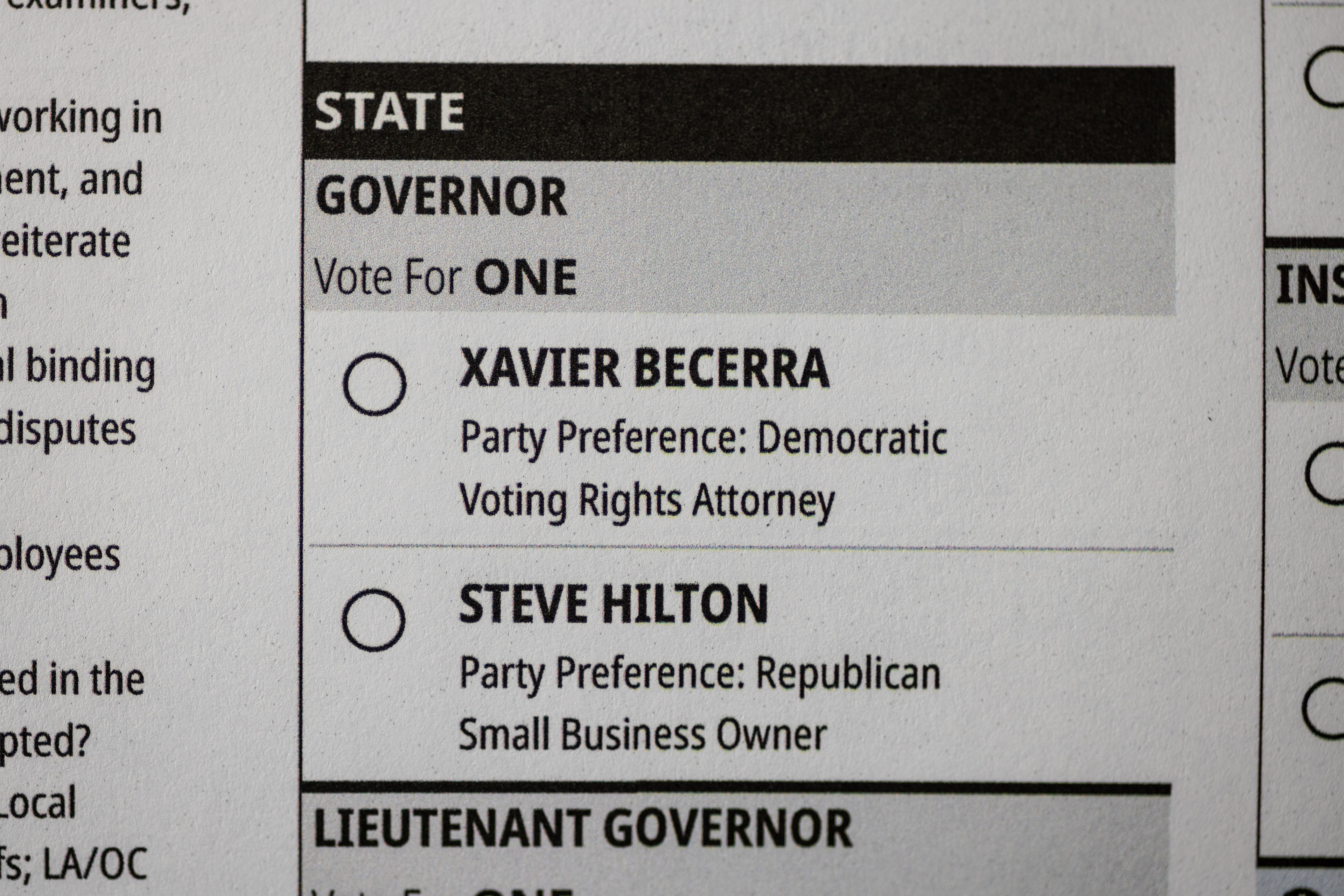
California voters are demanding relief from medical costs, but the leading candidates for governor have yet to lay out detailed plans for delivering it. Their proposals touch on drug prices, hospital competition and insurance, while leaving key questions about funding and execution unresolved.
The pressure is visible in household budgets. Ashley Porter and her husband have insurance through separate employer plans, yet since her multiple sclerosis diagnosis they have spent at least $75,000 annually on medical care—about a quarter of their gross income. Porter said the hospital bill following her diagnosis came to roughly $180,000, although insurance covered most of it.
“It is terrifying,” said Porter, who works in transportation sales in the San Francisco Bay Area. “I can’t imagine having this disease and not making the kind of income that we make.”
Employer coverage has become more expensive across the state. The average annual premium for a California family with employer-sponsored insurance is nearly $28,400, up 24% since 2022, a rise that has outpaced wage growth. Nationally, more than 40% of adults struggle to afford care. In California, a 2025 survey found nearly two-thirds worry about an unexpected medical bill, and six in 10 said they or a family member had skipped care because of cost.
The candidates’ plans leave implementation open
Democrat Xavier Becerra, a former U.S. health secretary with a polling lead in the governor’s race, says he would seek lower drug prices and challenge anticompetitive practices. As California attorney general, he brought a case against Sutter Health that ended in a landmark settlement. He has also called for Congress to restore an estimated $900 billion in federal Medicaid cuts and reinstate enhanced Affordable Care Act tax credits. Those two proposals depend on federal action, beyond a governor’s direct authority.
Republican Steve Hilton, a former Fox News host, says he would build on state rules for price transparency and pharmacy benefit managers, the companies that administer prescription drug benefits. He has also proposed partially replacing Medi-Cal with personal health accounts of up to $10,000 a year, a proposal facing an uphill path in a state legislature controlled by Democrats. Hilton says California should expand generic drug production through CalRx, allow consumers to choose cheaper, narrower insurance plans and require providers to disclose prices.
Neither candidate agreed to multiple interview requests about health policy. Kristof Stremikis, director of market analysis and insight at the California Health Care Foundation, said voters are looking for forceful action on spending and that the next governor and state policymakers will have a mandate to respond.


Consolidation has blunted earlier price controls
The candidates are confronting a cost problem that stretches well beyond any single policy. U.S. health spending grew from $75 billion in 1970 to a projected $5.7 trillion in 2025, rising nearly 40% since 2020. The Centers for Medicare & Medicaid Services projects it will consume more than one-fifth of the U.S. economy by 2032.
Payments to hospitals, doctors and clinics account for much of the increase, alongside prescription drug costs. Research has linked consolidation among physician practices, hospitals and insurers to weaker competition and higher prices. Becerra’s Sutter case focused on Northern California, where some procedures cost as much as 30% more than in other parts of the state.
Sutter, a Sacramento-based nonprofit health system that admitted no wrongdoing, paid $575 million and agreed to stop certain contracting practices. Among them were “all-or-nothing” terms that required insurers to include Sutter’s entire network of clinics and hospitals. Richard Scheffler, director of UC Berkeley’s Nicholas C. Petris Center on Health Care Markets and Consumer Welfare, called it the biggest hospital antitrust victory of its kind. But he said subsequent consolidation has diluted the settlement’s impact.
Becerra has said he would work with the next attorney general to scrutinize health care practices that drive up costs. Hilton’s competition agenda includes more generic medicines and greater price disclosure. Those ideas address parts of the market, but neither candidate has provided a detailed account of how their proposals would alter prices across a consolidated system.
Hospital bills show how prices reach patients
For patients, the gap between an insurer’s coverage and a manageable bill can still be enormous. Kia Frazier-Hill and her husband faced a $7,500 balance after his emergency hospitalization at an out-of-network facility. Their bronze-tier Covered California plan paid nearly $60,000 of the charges, which included $17,507 for one night in intensive care, $427.89 for a flu, COVID-19 and RSV test, and $2.60 for a tablet of generic regular-strength Tylenol. The remaining balance has been in collections for months.
“We’re drowning,” Frazier-Hill said. “It just doesn’t make any sense what they’re charging.”
California’s Office of Health Care Affordability is trying to constrain spending growth, directing most health systems, hospitals, insurers and large provider groups to keep increases to 3.5% this year. Hospital and physician groups argue that the target is too low and could restrict patient care. The California Hospital Association is challenging the caps. Its senior vice president of financial policy, Amber Ott, said costs cannot be addressed by isolating one part of the health system.
Hospitals are not the only source of high prices, but they are the largest. State figures show that hospitals received at least 40% of commercial health plan spending in 2024, the latest year available. Research also finds that prices tend to be higher where hospital markets have less competition. Rising health costs can squeeze employers’ capacity to raise wages or hire, while adding to medical debt already reported by 40% of California adults.
Other states offer policy options
California has used its authority to improve prescription drug price transparency and negotiate more competitive marketplace insurance rates, but it has not adopted some cost controls used elsewhere, said Sabrina Corlette, co-director of Georgetown University’s Center on Health Insurance Reforms.
Some states restrict facility fees, which can let hospitals charge more for services at clinics they own than independent doctors charge for similar outpatient care. Corlette said those fees raise patient costs and can encourage hospitals to acquire more practices. Oregon capped what public employee health plans pay hospitals; patients’ out-of-pocket costs for outpatient procedures fell nearly 10%. Rhode Island reviews rates in state-regulated health plans to limit hospital cost growth. California has adopted neither approach.
Other possible steps include automating prior authorization, the process insurers use to approve care, and requiring faster responses to requests. New Jersey and Vermont have set response-time requirements. Lawmakers could also widen restrictions on anticompetitive contracts, as Connecticut and Texas have done, or expand Los Angeles County’s effort to buy and forgive residents’ medical debt.
These measures may offer more immediate relief than broad promises, but they would still face resistance in Sacramento. Health care companies spend tens of millions of dollars each year seeking to influence state lawmakers and agencies. USC health economist Glenn Melnick said legislators ultimately have to decide how much of the state’s economic activity the industry should retain.
The next governor will inherit both a clear public demand for lower costs and a crowded set of policy levers with different limits. The practical test will be whether the administration can turn broad commitments on competition and affordability into specific changes that patients can see in their bills.
KFF Health News is a national newsroom that produces in-depth journalism about health issues and is one of the core operating programs at KFF—an independent source of health policy research, polling, and journalism. Learn more about KFF.
This article first appeared on KFF Health News and is republished here under a Creative Commons Attribution-NonCommercial-NoDerivatives 4.0 International License.



Discussion
Sign in to join the discussion.