Terrence Ruffin, Classic Physique competitor, details his three effective bicep exercises that significantly enhanced his arm growth.
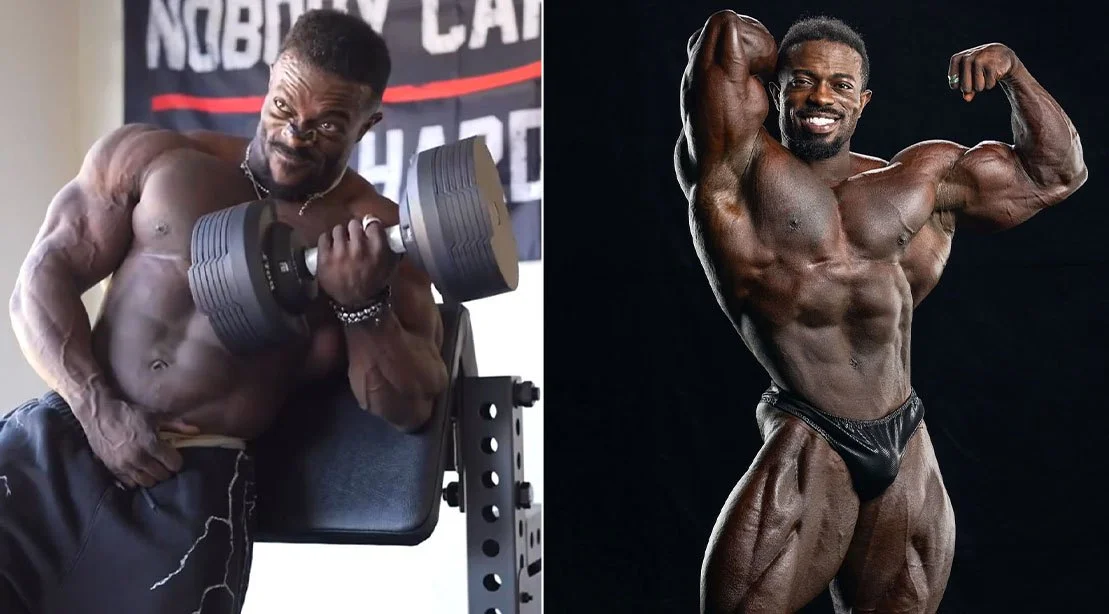
Men’s Classic Physique athlete Terrence Ruffin recently clinched victory at the 2025 EVLS Prague Pro, securing his spot in the 2026 Olympia finals. This is a significant milestone for any competitor in professional bodybuilding, as the Olympia represents the pinnacle of achievement in the sport. Despite his accolades, Ruffin candidly shares that developing impressive arms has been one of his biggest challenges. However, he’s discovered three key exercises that have had a major impact on his arm development.
The Journey of a Competitor
Throughout the world of bodybuilding, it's common to face specific growth barriers. For Ruffin, he's upfront about his struggles with arm development. It’s a sentiment echoed by many athletes in this highly competitive environment. "Arms have taken the longest time to grow for me,” Ruffin reflected, recalling how he earned his IFBB Pro Card at just 21 years old in 2014. This achievement is a testament not only to his commitment and skill, but also to the intense training regimens that professional bodybuilders endure. Many aspiring athletes often look to seasoned pros like Ruffin for insight into effective strategies.
Ruffin has identified that focusing on two to three exercises twice a week has resulted in notable improvements. His approach speaks to the critical importance of consistency and targeted training. While variety can lead to overall development, pinpointing specific movements that yield results can sometimes be more effective. This targeted strategy also emphasizes strength and mobility, crucial factors for anyone looking to excel in bodybuilding.
Training Techniques that Matter
One distinguishing aspect of Ruffin's training is his use of unilateral exercises. This is essential to ensure balanced development in both arms, preventing one side from becoming disproportionately stronger. If you're working in this space, this balanced approach can make a substantial difference in your physique. He points out the significance of using a controlled tempo in all movements to enhance time under tension—a factor deeply tied to muscle hypertrophy. The target here isn’t just to lift but to lift effectively over time, which can lead to real gains.
Ruffin's Top 3 Bicep Exercises
Single Arm Curls
Starting with single arm curls while leaning against a preacher bench, Ruffin opts for heavy weights. This exercise predominantly targets the biceps brachii, the two-headed muscle at the front of the upper arm. But it also engages the brachialis, which lies beneath the bicep and is key for elbow flexion. Engaging both muscle groups creates fuller, stronger arms—the kind that stands out on stage.
Single Arm Preacher Curls
Next, Ruffin incorporates single arm preacher curls, which allow for an isolated focus on the biceps brachii. This setup goes further, activating the brachialis as well. By emphasizing these specifics, Ruffin enhances muscle engagement and growth potential during lifts. There’s a lesson here: proper form and technique can't be overlooked if serious growth is a goal.
Single-Arm Cable Hammer Curls
His final exercise, single-arm cable hammer curls, diverges from traditional bicep curls by ensuring the palms face inward toward the torso. This slight adjustment redirects emphasis toward the brachialis while also strengthening the forearms. It’s an effective variation that not only bolsters overall arm development but also prevents the monotony that can sometimes hinder progress. Each of these exercises demonstrates Ruffin’s commitment to effective training techniques that yield results.
Understanding the Training Philosophy
“I typically perform 2 to 3 sets of each exercise,” Ruffin mentioned. But it’s the method he employs that deserves attention. Ruffin shared with his nearly 100,000 Instagram followers that he utilizes the “Double Progression” method, a two-phase approach introduced by coach Paul Carter. Initially, the focus is on executing 8 reps to master form. Then, he lowers the reps to 4-8 to crank up the intensity in the final set. It’s a nuanced strategy that illustrates how methodology can shape outcomes.
This systematic approach is especially noteworthy in a fitness culture obsessed with instant results. By stressing the importance of form before intensity, Ruffin implies a deep understanding of not just what it takes to grow, but how to mitigate the risk of injury—something many newcomers often overlook in pursuit of quick gains. And this is the part most people overlook: mastering technique isn't just about lifting more; it’s about lifting smart.
Implications, Significance, and Future Outlook
The insights gleaned from Ruffin’s approach aren't just pertinent to his conditioning; they offer broader implications for the fitness community. The preferences and techniques of high-level athletes often serve as a blueprint for trainees at all levels. By sharing his struggles and strategies publicly, Ruffin catalyzes a dialogue about the importance of informed training practices. For those serious about entering the realm of competitive physique sports, the takeaway is clear: there’s no substitute for hard work, consistency, and smart training.
Whether Ruffin continues to dominate the competition remains to be seen, but it’s clear that his methods are grounded in sound principles of strength training. Keeping an eye on athletes like him is important for anyone in the fitness world—professional and amateur alike. After all, the path to a sculpted physique involves more than just lifting weights; it’s about strategic decisions every step of the way.
To keep up with Terrence Ruffin’s updates, follow him on Instagram.



Discussion
Sign in to join the discussion.