The Bikini Competition Beginner’s Guide
Everything you need to know about the show from your tan to your outfit, and more.
Read articleThe Olympia introduces a Fit Model division, aiming for a toned aesthetic that's less muscular than traditional competitions, targeting a broader competitor base.
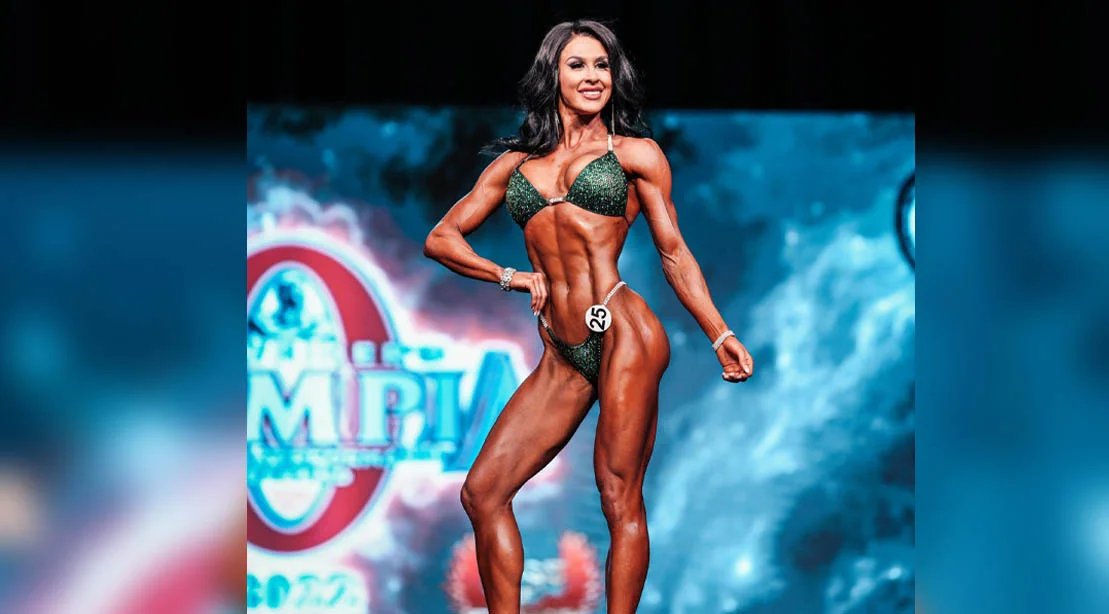
This week, the Olympia is making a significant shift by introducing the Fit Model division, a first in its storied history. This new category reflects an evolving approach in bodybuilding, diverging from the extreme muscle mass that has characterized many past competitions. As the face of fitness changes, it seems the Olympia wants to adapt its traditional ideals to fit a new narrative—one that doesn’t hinge solely on muscle size but also on aesthetics and overall health.
The Fit Model division aims to redefine beauty standards in fitness competitions. It's not just about bigger muscles or more definition; instead, the focus here embraces a balance of conditioning and femininity. The International Federation of Bodybuilding & Fitness (IFBB) has streamlined these criteria to ensure a less muscular look compared to Bikini competitors. Specifically, competitors in this new category must demonstrate a fit physique with toned muscles while avoiding excessive development in various muscle groups. This pivot represents a broader recognition of health and well-being over sheer muscle volume.
This shift can be interpreted as a direct response to a growing societal narrative that promotes fitness as a manifestation of well-being rather than merely an exhibit of muscle prowess. In light of recent trends emphasizing holistic health, the Fit Model division appears to be a strategic attempt to attract a more diverse participant base, one that might not have previously engaged with the sport due to unrealistic body expectations.
Competitors are expected to have a well-shaped physique, but with less emphasis on muscle mass. The judging guidelines describe a look that mirrors what one might see on the cover of a health magazine. Aspiring Fit Model competitors should avoid pronounced definitions in their legs, glutes, and arms, steering clear of the hyper-muscular physiques that have become common in other divisions. Judges are instructed to look for a midsection that's fit yet not overly sculpted. The absence of visible glute-ham tie-ins and hamstring separations is also critical.
This approach is indicative of a larger movement toward inclusivity in the fitness world. It showcases the belief that strength and fitness come in various forms and sizes. The core intention is to reflect a natural, health-centric look rather than the extreme bodybuilding conditioning that has dominated the scene. Back in 2015, IFBB Pro Ashley Kaltwasser’s physique was cited as an exemplar for what this division aspires to present, embodying the ethos of health over hypermuscularity.
The introduction of this division seems to stem from a historical cycle in bodybuilding where various categories start with a specific ideal, but over time, pressure to grow leads to even more muscle and conditioning. Past classes like Women’s Bodybuilding, Figure, and Bikini have all experienced this escalation, making it hard for aspiring competitors to find a class that aligns with their desired physiques. Even those looking to steer clear of overly muscular physiques find themselves pushed beyond their initial ideals.
Fit Model is an attempt to reset some of these expectations. The presentation style supports this ethos—competitors will perform a more limited range of poses compared to traditional bodybuilding. This more constrained showcase allows contestants to appear more approachable and relatable, moving away from the extremes associated with prior divisions. The suits are required to be simple, forgoing the extravagant embellishments often seen across other divisions, moving towards a more straightforward and refined display of physique. This shift is not just cultural; it’s practical—simplifying the costume requirements may lower barriers to entry for competitors.

Everything you need to know about the show from your tan to your outfit, and more.
Read articleThis new division is fundamentally designed to attract women who might have previously been dissuaded from competition due to tightening standards in other categories. Many women who lead an active lifestyle and display healthy physiques no longer feel the need to conform to extreme ideals of muscularity. Instead, they’re now presented with an opportunity that celebrates fitness without a hyper-focus on how much they can lift or how prominent their muscles are.
However, maintaining the integrity of these criteria poses a challenge. As judges evaluate the first Fit Model competitors, their decisions will set a precedent for the future of this division. If the standards are relaxed over time, we may witness another cycle of growth, necessitating yet another division to rein in expectations. This is a common story in competitive fitness; a category starts with a clear vision, only to devolve as competitors push boundaries further in pursuit of accolades.
The debut of the Fit Model division at the Olympia raises key questions—will it successfully broaden the appeal of physique competitions? The outcome of this inaugural contest will shape the direction of this new division for years to come. If you're working in this space, the implications are significant. Are we finally moving away from the relentless muscle gain that has dominated women’s categories? Or are we setting ourselves up for another cycle of escalating standards?
This remains to be seen. But this initiative is more than just a rebranding exercise; it reflects a deeper shift in fitness culture towards inclusivity and varied representation. The success or failure of the Fit Model division could well redefine how femininity and strength are perceived in competitive fitness.
Discussion
Sign in to join the discussion.