Explore how grip style and placement influence strength, stability, and injury prevention in weight training, enhancing overall lifting effectiveness.
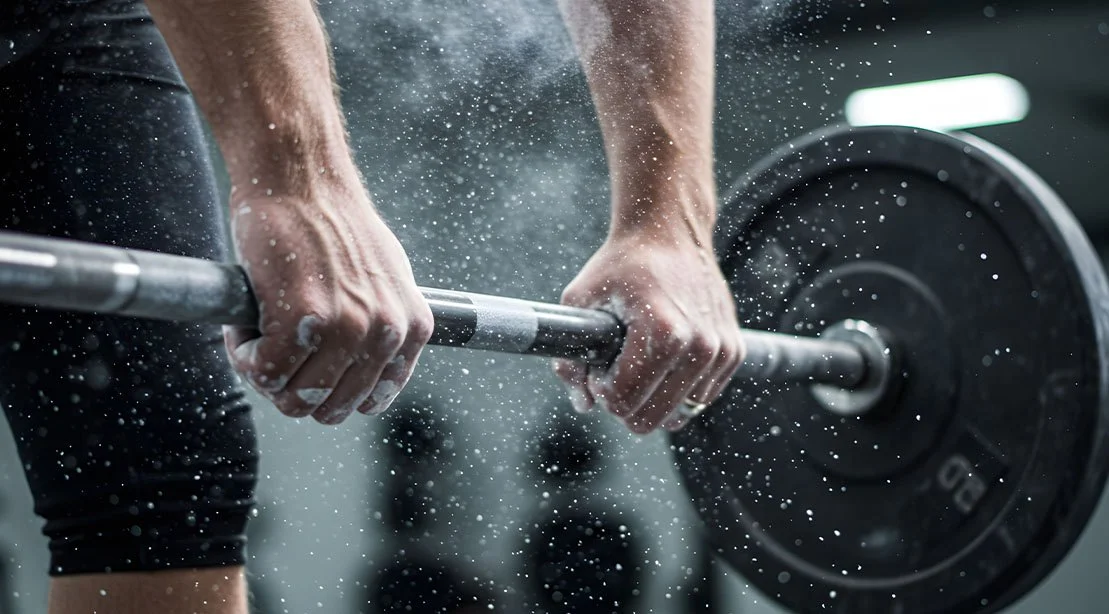
Your Grip: The Foundation of Strength Training
Grip technique isn't merely an accessory to lifting; it's the foundation that determines form, joint alignment, and ultimately success in strength training. Often overlooked, how you grasp the bar can dictate your performance and efficiency during lifts. Misalignment can lead to joint strain and limit your overall capacity, while a strong grip enhances your connection to the weight, allowing you to lift with greater effectiveness.
Understanding your grip dynamics is essential; factors like grip width, wrist positioning, and hand placement directly influence your strength output, stability, comfort, and even your range of motion. For instance, a correct grip will facilitate effective force transfer, while an improper one may cause premature fatigue in the wrists, potentially compromising your intended workout.
Grip Styles: Know Your Options
Recognizing the different grip styles can significantly enhance your training effectiveness. Here are six primary grip variations, each with unique advantages and disadvantages:
1. Pronated Grip
In a pronated grip, your palms face away from you. This is the standard grip for many exercises, aiding in symmetry and control.
- Advantage: It's straightforward and symmetrical.
- Drawback: May limit your pull strength since it's not always the strongest grip.
- Ideal for: Lifters prioritizing grip strength.
2. Supinated Grip
A supinated grip involves your palms facing you, enhancing bicep engagement during lifts like curls and chin-ups.
- Advantage: Puts the biceps at a mechanical advantage.
- Drawback: Some may experience discomfort in the wrists or elbows.
- Ideal for: Lifters emphasizing bicep work.
3. Neutral Grip
With palms facing each other, the neutral grip feels organic and reduces strain.
- Advantage: Often the strongest grip due to wrist alignment.
- Drawback: Not all equipment allows for this grip.
- Ideal for: Those who feel discomfort with other grips.
4. Mixed Grip
A mixed grip combines one pronated and one supinated hand, commonly used in deadlifts for added security.
- Advantage: Reduces bar rolling and allows for heavier lifts.
- Drawback: Can create an asymmetrical arm load.
- Ideal for: Lifters seeking to maximize their deadlift weights.
5. Hook Grip
In the hook grip, your thumb wraps around the bar, with fingers lying over it. This grip is favored in Olympic lifting.
- Advantage: Provides a secure hold ideal for heavy lifts.
- Drawback: It can be uncomfortable until acclimated.
- Ideal for: Those looking for a secure alternative to the mixed grip.
6. False Grip
The false grip lacks a thumb wrap, placing it alongside the fingers on the same side of the bar.
- Advantage: Better wrist alignment for squats.
- Drawback: Less security, making it unsuitable for most pressing exercises.
- Ideal for: Lifters wanting to maintain straighter wrist positioning.
Placement of the bar in your grip is also pivotal. In pressing movements, keeping the bar toward the base of your palm aids in force transfer, while during deadlifts, ensuring the bar sits correctly prevents it from rolling toward the fingers, which can often lead to discomfort or callousing.
Muscle Engagement: How Grip Affects Recruitment
The positioning of your grip can change the path of your elbows and shoulders, influencing which muscles are engaged in each lift. Let's dissect a few exercises:
Rows
Grip variation during rows can dramatically alter muscle engagement. Different grips can emphasize different muscle groups:
- Pronated Grip: Increases upper back activation through elbow flare.
- Supinated Grip: Enhances bicep involvement and maintains closer elbow positioning, engaging the lats more effectively.
- Neutral Grip: Maintains natural shoulder positioning, allowing for custom elbow paths.
Curls
Grip position directly influences bicep activation:
- Supinated Grip: Maximizes bicep strength.
- Neutral Grip: Engages both the brachialis and forearm muscles.
- Pronated Grip: Offloads more work to forearm extensors.
Pull-Ups and Chin-Ups
The choice of grip influences muscle recruitment:
- Pronated Pull-Ups: Target upper back with less bicep assistance.
- Supinated Chin-Ups: Favor bicep engagement, making them easier for many.
- Neutral Grip: Offers comfort while still engaging the biceps effectively.
Deadlifts
Deadlift grip choice can make or break your lift:
- Double-Overhand: Balances the load but may limit grip strength.
- Mixed Grip: Secures the bar but introduces asymmetry.
- Hook Grip: Combines security with symmetry for optimal lifting.
Finding Your Optimal Grip
Identifying the best grip for you involves assessing comfort, stability, and overall strength output. To evaluate your grip effectiveness, consider the following:
- Does it cause pain? Discomfort could indicate an unsuitable grip position.
- Are you lifting more effectively? Assess if your grip enhances your strength during lifts.
- Does it reveal weaknesses? If specific grips expose limitations in your strength, take note.
- Is it anatomically appropriate? Tailor your grip to your unique body structure.
Grip Evaluation Checklist
As you assess your grip choices, keep this checklist in mind:
- Does it feel comfortable without causing strain?
- Can you maintain a neutral wrist position?
- Does it allow for a full range of motion?
- Is the weight stable during the lift?
- Does it enhance your strength consistently?
- Does it highlight areas needing improvement?
Final Thoughts
Your grip is the gateway to effective lifting. Paying attention to its impact can dictate the success of your workouts and overall strength development. Remember, it's not just about how much you can lift, but how well you can maintain proper form and leverage. Continuous adjustment and awareness of your grip will ensure you're making the most out of every training session.



Discussion
Sign in to join the discussion.