Tommy Paul's training routine emphasizes energy management, interval workouts, and mental resilience, providing valuable insights for athletes seeking to enhance performance.
A professional tennis player’s preparation can often feel like a waiting game, and Tommy Paul exemplifies this challenge. His training might kick off with a warm-up as early as 9:30 AM, but the actual start of competition can be unpredictable. Matches can end quickly or stretch for three grueling hours, making energy preservation essential.
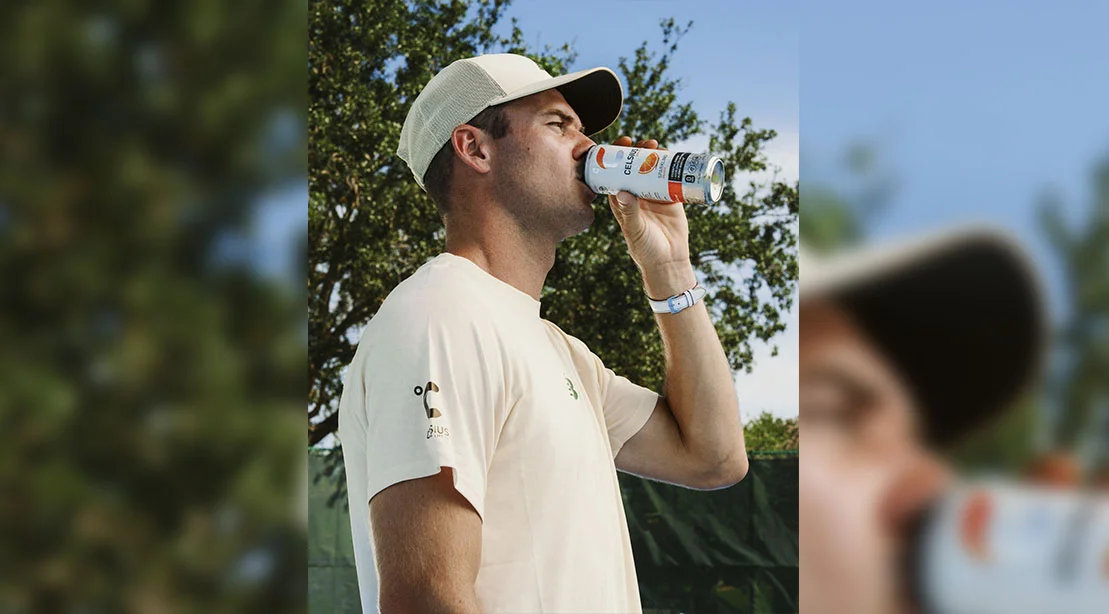
For Paul, maintaining focus and physical readiness during these delays is critical. He adheres heavily to his training schedule, prioritizing consistency in his routine. In discussions with Muscle & Fitness, Paul highlighted the role of Celsius, a beverage that supports his energy levels during long days on the court.
"A lot of times I’m dragging by the afternoon if we have a long tennis session," Paul admits. "So, it’s nice to lean on Celsius to give me that pick-me-up right before working out.” The familiar taste helps him stay connected to his regimen amid the chaos of traveling and competing.
Training Amidst Uncertainty
Preparing for the unpredictable nature of professional tennis is no simple task. Paul acknowledges that recreating the exact demands of a five-hour Grand Slam match in training is impossible. Instead, he and his coaching team focus on simulating the bursts of intense effort coupled with recovery that characterize tennis matches.
"I think it all starts at home in training," Paul states. "We bust our ass in training and work very hard." His workouts can include grueling four-hour practice sessions complemented by evening conditioning. The objective is clear: build a physical capacity that withstands the pressure of lengthy matches without succumbing to fatigue.
Key to his regimen is interval training, which Paul considers vital. His conditioning sessions often involve 40 seconds of intense effort—pedaling hard on an assault bike or sprinting on a treadmill—followed by brief recovery periods. “Long-distance stuff doesn’t really do a whole lot for us because we’re not running nonstop,” he explains. The goal isn’t merely to increase endurance but to develop the ability to recover swiftly between critical points in a match.
Proactive Fueling and Recovery Tactics
Paul’s approach to match preparation includes careful attention to sleep, hydration, and nutrition well before entering the locker room. He emphasizes the often-overlooked value of sleep, as well as the importance of staying hydrated leading up to a match.
“I think sleep is something under-talked about,” says Paul, who also has a structured meal plan that aligns with his match schedule. Evening meals generally feature carbohydrates, often paired with steak or chicken and rice, designed to avoid digestive troubles during high-intensity moments.
"Basically nothing acidic," Paul advises when discussing his diet. His meals are deliberately uncomplicated: straightforward options that provide the necessary energy without causing disruptions during performance.
Post-match recovery hinges on the effort exerted during play. A brief match may warrant minimal downtime while Paul focuses on hydration and rest. Conversely, a lengthy battle means lighter training and mobility work on the following day, ensuring his body is ready to take on the next challenge.
The Unique Strength of Tennis Players
The physical prowess of tennis players often defies expectations. Paul recognizes this misconception: “What I think is funny is so many people will maybe look at (Alexander) Zverev or (Daniil) Medvedev and think that they’re just skinny guys. Those dudes are strong in a different way than you would assume.”
For players, strength is rooted in the legs—necessary for explosive acceleration and rapid stops—as well as balance and core stability for effective shots, particularly under fatigue. These attributes become increasingly crucial as physical exertion mounts.
The mental aspect of tennis is equally paramount. Paul suggests the mental game represents “90 percent” of competing successfully. The pressure of performance means that managing emotions and maintaining focus can be as critical as physical training. Players develop strategies to reset, employing mental cues to regain focus quickly after setbacks.
Paul believes surrounding oneself with supportive individuals and setting tangible goals mitigates the stress of frequent travel and competition. When asked what everyday athletes could learn from his experience, he emphasizes the importance of establishing a consistent routine: “Finding your routine and sticking to it is key.”
Workout Inspired by Tommy Paul
Total time: 30–40 minutes
Equipment: Dumbbells/kettlebell, resistance band, cardio machine, or running space
Warmup: 5 Minutes
Complete two rounds of lateral shuffles for 30 seconds, 10 bodyweight squats, six reverse lunges per leg, 15 band pull-aparts, and 30 seconds of high knees, gradually increasing your movement capability.
Strength and Stability Circuit: 10–12 Minutes
Complete three rounds of:
- Goblet squat: 10 reps
- Reverse lunge: 8 reps (each leg)
- One-arm dumbbell row: 10 reps (each side)
- Pushups: 10–15 reps
- Plank shoulder taps: 20 reps (each side)
- Lateral skater bounds: 8 reps (each side)
Rest for 45 seconds between rounds. Paul highlights that elite tennis players have unique physiological strengths that enable them to balance power with exquisite coordination.
Tennis Point Intervals: 10 Minutes
Utilize an Assault bike, treadmill, rower, or open running area. Engage in 40 seconds of hard effort followed by 20 seconds of recovery for eight rounds, resting for an additional two minutes afterward.
Paul employs similar interval methods to mimic the pacing of tennis points and to condition his heart rate to recover quickly between efforts. “You’ve got to know how to get your heart rate back down in between every point,” he notes.
Core and Mobility: 5–8 Minutes
Complete two rounds of 10 dead bugs per side, 30-second side planks, 10 Pallof presses per side, and 30-second hip-flexor stretches. This should be approached as both a training and recovery phase to enhance mobility and strength.
Paul insists that for everyday athletes, the most valuable takeaway is consistency in training. “Routine matters more than the occasional brutal session,” he concludes, encouraging athletes to build a sustainable training program they can commit to over time.



Discussion
Sign in to join the discussion.