Oregon is advancing a universal healthcare proposal that could reshape healthcare access and funding, potentially influencing other states and the federal landscape.
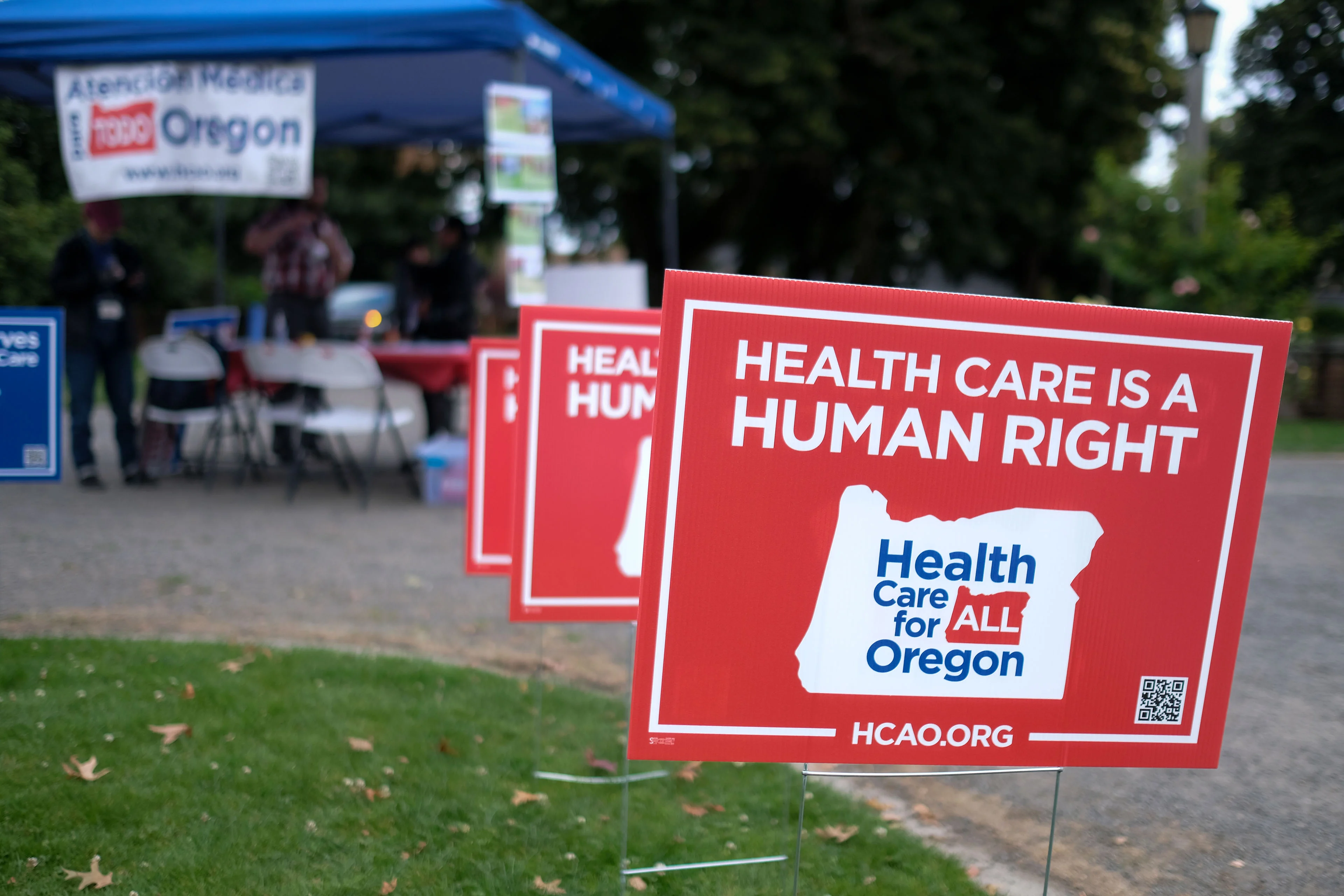
As the midterm elections approach, Democratic leaders are gearing up to tackle health coverage expansions, aiming to enhance Affordable Care Act subsidies, reverse cuts to Medicaid, and lower the Medicare eligibility age. Yet, several Democratic strongholds—most notably Oregon, California, New York, and Washington—are setting their sights even higher, advocating for single-payer, universal healthcare systems.
Oregon stands at the forefront of this movement. A legislative panel, established in 2023, is tasked with crafting a comprehensive universal health plan, with submissions due by December 1. The Universal Health Plan Governance Board is committed to providing medical, vision, dental, and mental health benefits for every resident, eliminating premiums, deductibles, and copayments starting in 2032. Should the proposal gain legislative approval, it could become the first instance of a single-payer system in the U.S. and a potential benchmark for other states and the nation.
Rising Support for Universal Healthcare
Advocates argue there's a growing public consensus around universal healthcare, driven by escalating healthcare costs and the complexities of insurance. Surveys reveal that many patients delay care due to out-of-pocket expenses, with medical debt cited as a leading cause of bankruptcy nationwide. History also favors states as test beds for health policy reform; for instance, the Affordable Care Act emerged from Massachusetts' initiative toward universal coverage.
“In the short to medium term, passing a national ‘Medicare for All’ bill seems unlikely,” notes Jonathan Oberlander, a health policy professor at the University of North Carolina. “States like Oregon offer a more politically conducive atmosphere for pursuing such reforms.”
Challenges from the Healthcare Industry
However, the road ahead is strewn with obstacles, particularly from large healthcare entities, including hospital systems, which might resist sweeping reforms. For context, the healthcare insurance industry boasts nine representatives on the Fortune 500 list, and its lobbying power has historically thwarted similar universal healthcare initiatives. This was evidenced in 2011 when Vermont's legislature initially endorsed a universal healthcare plan, only for it to be abandoned three years later due to concerns over economic implications.
Ballot measures aimed at implementing universal healthcare have also faced significant setbacks, with initiatives in Colorado, Oregon, and California ultimately failing. “The hopes of progressive reformers often collide with stark political realities,” Oberlander remarked on the challenges of enacting such ambitious reforms.
Oregon's Financial Framework for Universal Coverage
The proposed plan revolves around maintaining current healthcare spending levels while introducing new taxation to fund a single health coverage system. It aims to replace insurance premiums with corporate and personal taxes, pooled with federal and state funds. This model suggests that efficiencies gained from reduced administrative costs and negotiated drug prices could lead to improved benefits for a wider population.
For instance, in simulations for focus groups, the Board projected significant savings under the new tax scheme. A 30-year-old earning $55,000, currently paying over $5,478 annually for insurance premiums, might only pay $2,331 in taxes under the proposed system. Furthermore, individuals with employer-sponsored plans could see themselves contributing nothing for health services, seeing any physician within the state.
The proposal maintains the current employer contributions to health coverage through a payroll tax on companies with payrolls exceeding $500,000, alongside potential tax credits for employees. As a result, a substantial portion of Oregonians—between 31% and 60%—could potentially receive healthcare benefits without any out-of-pocket costs.
Communication and Advocacy Pressures
Backers must engage in a significant advocacy campaign to convince both patients and healthcare providers of the benefits of such a structured plan. Hospitals currently manage complex billing practices for multiple insurance plans, which adds unnecessary costs. A universal plan could streamline operations, providing substantial financial relief to rural hospitals that frequently operate with high uninsured or low-reimbursement Medicaid patients.
However, skepticism exists among hospital administrators. Becky Hultberg, CEO of the Hospital Association of Oregon, has voiced concerns that the proposal may merely add financial burdens and complexity to an already strained system. “The universal health plan proposal preserves much of the broken, fragmented status quo and adds new taxes that Oregonians can’t afford,” she stated.
Implications for Healthcare Providers
The payment structure under the proposal suggests compensation would align between Medicare and private insurance rates, shifting emphasis to primary care rather than specialists. While the total payout to physicians might remain stable, negotiations could lead to adjustments that favor primary care, yet concerns remain regarding the willingness of doctors to accept this new framework.
Rebecca Schoon, an associate health policy professor, highlighted that the complexities of creating an inclusive plan may yield both winners and losers, with effective messaging being crucial. Together, healthcare providers may find common ground in their interest for reducing administrative burdens but remain divided on their collective response to this universal coverage initiative.
Overcoming the Federal Hurdle
Another looming question is whether Oregon could successfully secure necessary federal waivers to redirect Medicare and Medicaid funding into this new unified healthcare system. With the current political climate uncertain, proponents of the proposal can only hope that federal funding becomes more favorable after the next presidential election cycle, with some speculating that a future administration may better support such initiatives.
California and New York are also pursuing single-payer healthcare discussions, engaging their legislatures in similar dialogues. Conversations among the West Coast states have begun, looking to forge collaborative efforts based on shared goals.
Health plans, however, are likely to mount significant opposition to these initiatives, framing the narrative around increased tax burdens and fears of “socialized medicine.” Wendell Potter, a former insurance executive, cautions that misinformation may easily sway public opinion against universal healthcare efforts.
The upcoming dialogues and strategies in Oregon could serve as a pivotal moment not just for the state but possibly for the country, as this proposed system matures and navigates the tricky waters of legislative approval and public support.
KFF Health News is a national newsroom that produces in-depth journalism about health issues and is one of the core operating programs at KFF—an independent source of health policy research, polling, and journalism. Learn more about KFF.This article first appeared on KFF Health News and is republished here under a Creative Commons Attribution-NonCommercial-NoDerivatives 4.0 International License.



Discussion
Sign in to join the discussion.