With nearly 60% support among Americans, Medicare for All proposals face significant political and economic hurdles in achieving universal healthcare.
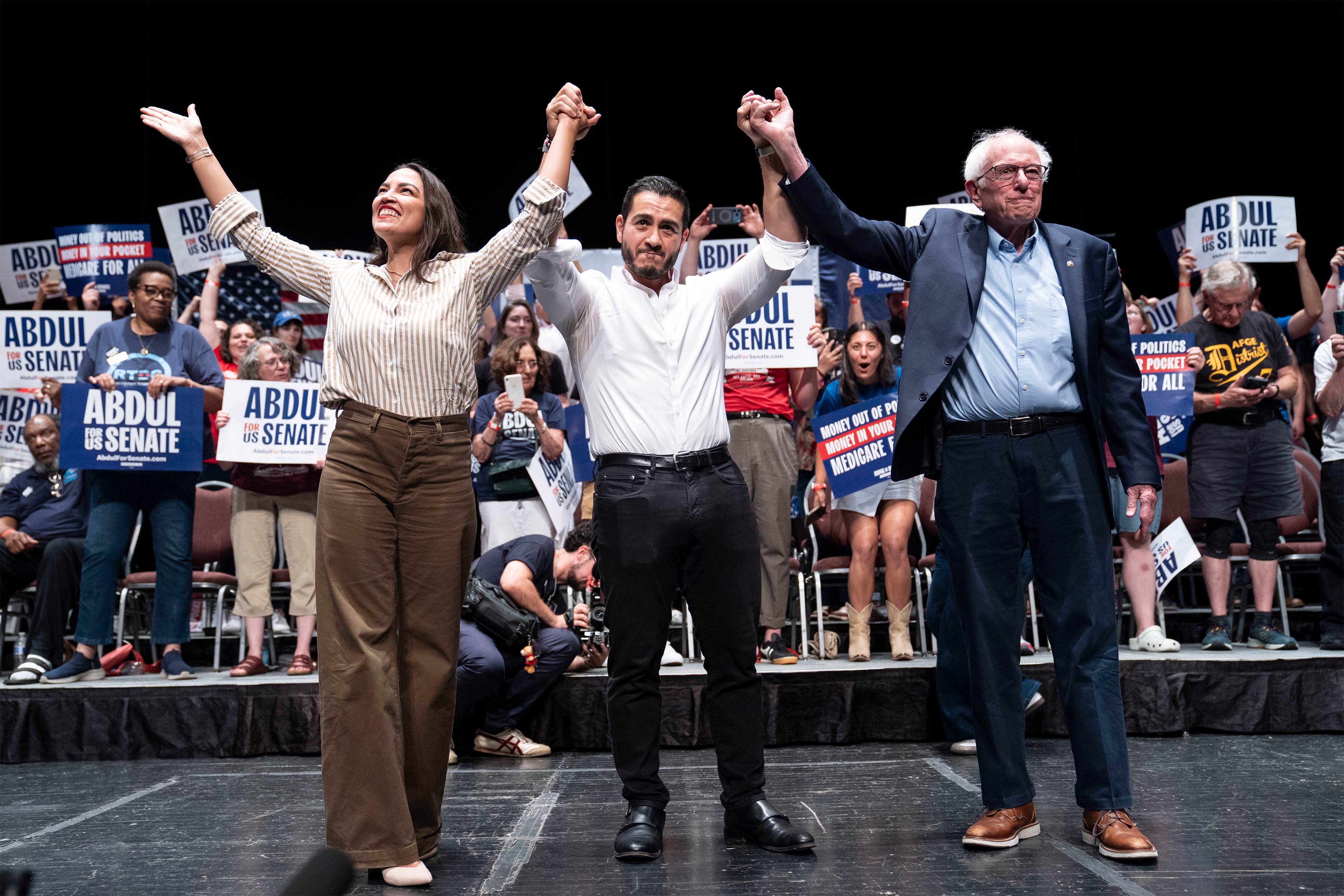
As dissatisfaction with the U.S. healthcare system intensifies, the “Medicare for All” proposal is resurfacing as a significant topic within political discussions and campaigns. Recent polling indicates that around 60% of the American public supports the idea, a sentiment that swells to 85% approval among Democrats. Despite this support, concrete legislative action has been elusive, with numerous past proposals remaining largely symbolic.
Notably, Democratic Senator Chris Van Hollen from Maryland recently expressed his support, citing overwhelming constituent frustration with rising healthcare costs and accessibility. As over 100 million Americans struggle with medical debt, the allure of accessible healthcare becomes increasingly appealing. However, the pathway from concept to implementation presents complexities, with differing interpretations of what “Medicare for All” entails.
Economist Amy Finkelstein from MIT argues that the term is ambiguous; it lacks a specific proposal, making it challenging to debate meaningfully. Along with her colleague Liran Einav from Stanford, they present a vision of a basic, government-funded insurance plan which they describe as “a shack, not a chateau.” This outlook proposes essential coverage for catastrophic events while potentially limiting certain services, paving the way for supplemental plans that cover additional needs.
Abdul El-Sayed, a Democratic senatorial candidate in Michigan and a prominent advocate for a Medicare for All approach, contrasts with Finkelstein's notion. El-Sayed envisions a more expansive model that would eliminate costs for patients across a broad range of medical services, including vision and dental care—areas that traditional Medicare does not address. His phased approach would initially lower the eligibility age for Medicare, gradually covering all demographics within eight years, while ensuring that healthcare providers aren't abruptly affected by sudden payment rate changes.
A pivotal question revolves around the financing of such ambitious reforms within an industry projected to consume $5.7 trillion—nearly 20% of the U.S. GDP—by 2025. The U.S. already spends significantly more on healthcare per capita compared to many peer nations, with insurance being one of the largest corporate expenses after payroll. A fundamental challenge is rerouting these existing financial flows into a single-payer system without imposing new taxes or increasing government spending, an aspect that often dampens public support when discussed in polls.
Proponents of Medicare for All face a daunting task, especially in convincing voters that the potential loss of their current coverage or the introduction of new taxes is worthwhile. Finkelstein notes that raising taxes to provide extensive coverage is one avenue, yet budget constraints are a concern. She highlights a common trend in political negotiations where ambitious proposals dilute into more palatable alternatives just for the sake of securing votes.
President Joe Biden has also been vocal about his opposition to Medicare for All, suggesting his reluctance stems from concerns over costs that could eclipse $40 trillion over a decade—all while detailed financial plans remain absent from many proposals currently in Congress.
Despite such hurdles, some economists suggest transitioning to Medicare for All could ultimately yield significant savings—in the vicinity of $450 billion annually—by allowing for government negotiations of medical costs and eliminating the inefficiencies associated with private insurance management. However, well-established players in the healthcare industry, including insurers and pharmaceutical companies, are expected to resist any attempts to lower prices, given their vested interests and significant lobbying power.
Another recent alternative comes from Texas Senate candidate James Talarico, who advocates for a “Medicare for Y’all” model, which would permit those under 65 to buy into Medicare. This reflects a growing trend among some Democratic candidates to offer variations of universal coverage rather than strictly adhering to a one-size-fits-all model.
While traditional organizations like the American Medical Association have consistently opposed sweeping reforms, there’s emerging support from different medical groups; over half of physicians now express a preference for some form of a single-payer system. The American College of Physicians, which is the second-largest physician organization, has aligned itself with the Medicare for All movement, suggesting that support within the medical community is gradually shifting.
As discussions around Medicare for All evolve, the critical next step for supporters will be to clarify what a realistic implementation of this system would entail. The diverse interpretations across the political spectrum necessitate a cohesive vision that addresses feasibility and financial sustainability while navigating the entrenched interests that could resist reform.
KFF Health News is dedicated to thorough journalism on health-related matters, providing an independent perspective on health policy research and reporting. For more information about KFF, visit their site.
This article originally appeared on KFF Health News and is shared here under a Creative Commons Attribution-NonCommercial-NoDerivatives 4.0 International License.



Discussion
Sign in to join the discussion.