Broccoli sprouts may reduce H. pylori and stomach inflammation, while long-term garlic research points to a possible benefit against stomach cancer.
Broccoli sprouts have shown an ability to reduce H. pylori infection and stomach inflammation in human studies. The effect is meaningful, but it doesn’t match standard antibiotic treatment—and the evidence for garlic’s role in lowering stomach cancer risk has taken decades to emerge.
Diet can shape stomach cancer risk
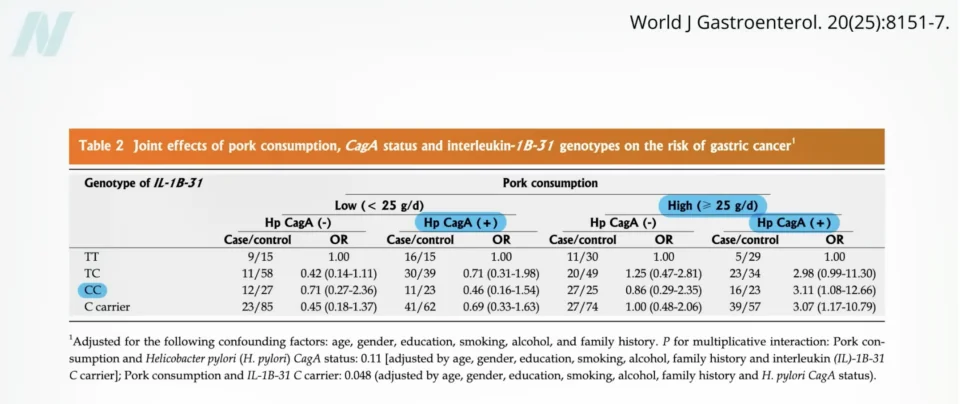
H. pylori infection is a major cause of stomach cancer, but infection alone doesn’t explain who develops the disease. Research suggests that diet can amplify the effects of the bacteria. In one Chinese study, people with a particularly harmful strain of H. pylori and inherited susceptibility did not appear to face higher stomach cancer risk unless they ate about an ounce or more of pork each day. An average pork chop weighs roughly six ounces. The findings suggest that dietary patterns can influence risks linked to both genes and infection.
Several mechanisms could help explain the association between meat and stomach cancer. Salting and pickling fish can produce CMBA, a DNA-mutating chemical formed when salt and nitrite preservatives react with methionine, an amino acid concentrated in animal proteins. Nitrites can also react with proteins to form N-nitroso compounds, a class of carcinogens also found in cigarette smoke. These processes may help account for links between stomach cancer and processed meats such as bacon, ham, hot dogs, lunch meat and sausage. Research has also associated fresh, unprocessed, unsalted meat with risk.
The relationship between infection and food cuts both ways: H. pylori-driven gastritis can interact with diet in the development of stomach cancer. Research has described this as a synergistic effect, making diet relevant even when infection is the underlying driver.
Broccoli sprouts show promise against H. pylori
Doctors commonly treat H. pylori with three antibiotics. The regimen can be difficult for patients to complete because it involves several drugs and can cause adverse effects. That challenge has prompted researchers to examine whether foods might help control the infection.
Sulforaphane, a compound found in cruciferous vegetables, was first studied for its antimicrobial activity, years before research focused on its potential detoxifying and anticancer effects. After reports that broccoli sprouts brought relief to some people with H. pylori-related peptic ulcers, researchers, including teams at Johns Hopkins University, began testing the sprouts.
In laboratory studies, broccoli sprout extracts killed antibiotic-resistant H. pylori strains. Human findings have been more mixed but still notable: some patients given about a third of a cup of broccoli sprouts daily for a week cleared the infection. In a randomized trial comparing broccoli sprouts with alfalfa sprouts, participants who ate broccoli sprouts equivalent to two or three servings of broccoli per day had lower measures of H. pylori colonization and inflammation in the stomach lining.
One study reported that broccoli sprouts eradicated H. pylori in 56% of patients. That rate is well below the roughly 90% eradication reported with standard triple-drug therapy. Still, cruciferous vegetables may offer a dietary option for people who don’t meet the criteria for antibiotic treatment. A review of 22 population studies found that higher cruciferous vegetable consumption was associated with lower stomach cancer risk. Broccoli itself hasn’t been directly tested for cancer prevention in this context.
The research on broccoli sprouts and natural approaches to H. pylori illustrates the distinction between lowering infection markers and reliably clearing an infection: the former has stronger support than the latter.
Garlic’s long-term evidence is suggestive
Garlic and onions belong to the allium family, and observational research has linked their consumption to lower stomach cancer risk. Studies of Japanese migrants dating back to the 1960s helped raise the possibility that these vegetables might be protective.
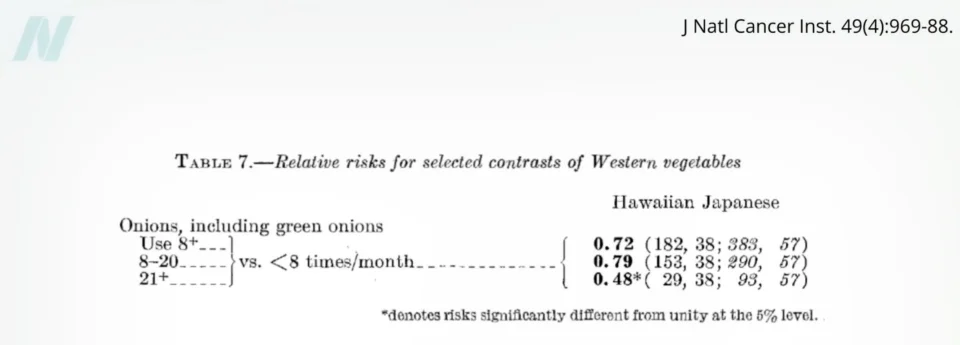
Dozens of later studies have reported a similar association, but it’s not proof that garlic or onions prevent cancer. Publication bias may have tilted the evidence: studies that found no association could have gone unpublished. And people with stomach inflammation may choose blander food to avoid discomfort, so lower garlic and onion consumption could be a consequence of illness rather than its cause.
Laboratory work offers a possible mechanism. Louis Pasteur was among the first to describe antibacterial effects from garlic and onion juices. In petri dish experiments, a concentration of garlic achievable in the stomach from one clove suppressed H. pylori, including some antibiotic-resistant strains. Whether that effect translates into lower cancer risk required longer-term study.
A randomized, double-blind trial assigned people at high risk of stomach cancer in 13 Chinese villages to different combinations of antibiotics, garlic supplements and antioxidant supplements. Antibiotic treatment for just a few weeks was associated with fewer precancerous stomach growths seven years later and lower stomach cancer incidence at 15 years. Garlic supplementation showed no benefit at seven years; at 15 years, the reduction was not statistically significant.
The picture changed in a 22-year follow-up, published 15 years after the trial ended. Participants who had taken garlic had a significantly lower risk of dying from cancer. The apparent protection was seen among people who didn’t drink alcohol, a detail that complicates any broad claim about garlic’s effect.
For now, broccoli sprouts have human evidence for reducing measures of H. pylori colonization and stomach inflammation, while garlic’s strongest signal comes from long-term cancer outcomes. Both are worth studying, but neither replaces the higher eradication rate seen with antibiotic therapy.
Doctor’s Note
For related research, see Pickled Paradox: Kimchi’s Link to Stomach Cancer.
More on cruciferous and allium vegetables:


Discussion
Sign in to join the discussion.