Experimental peptides are gaining attention, but limited clinical evidence leaves safety and treatment claims unproven. The case for better health doesn’t justify skipping trials.
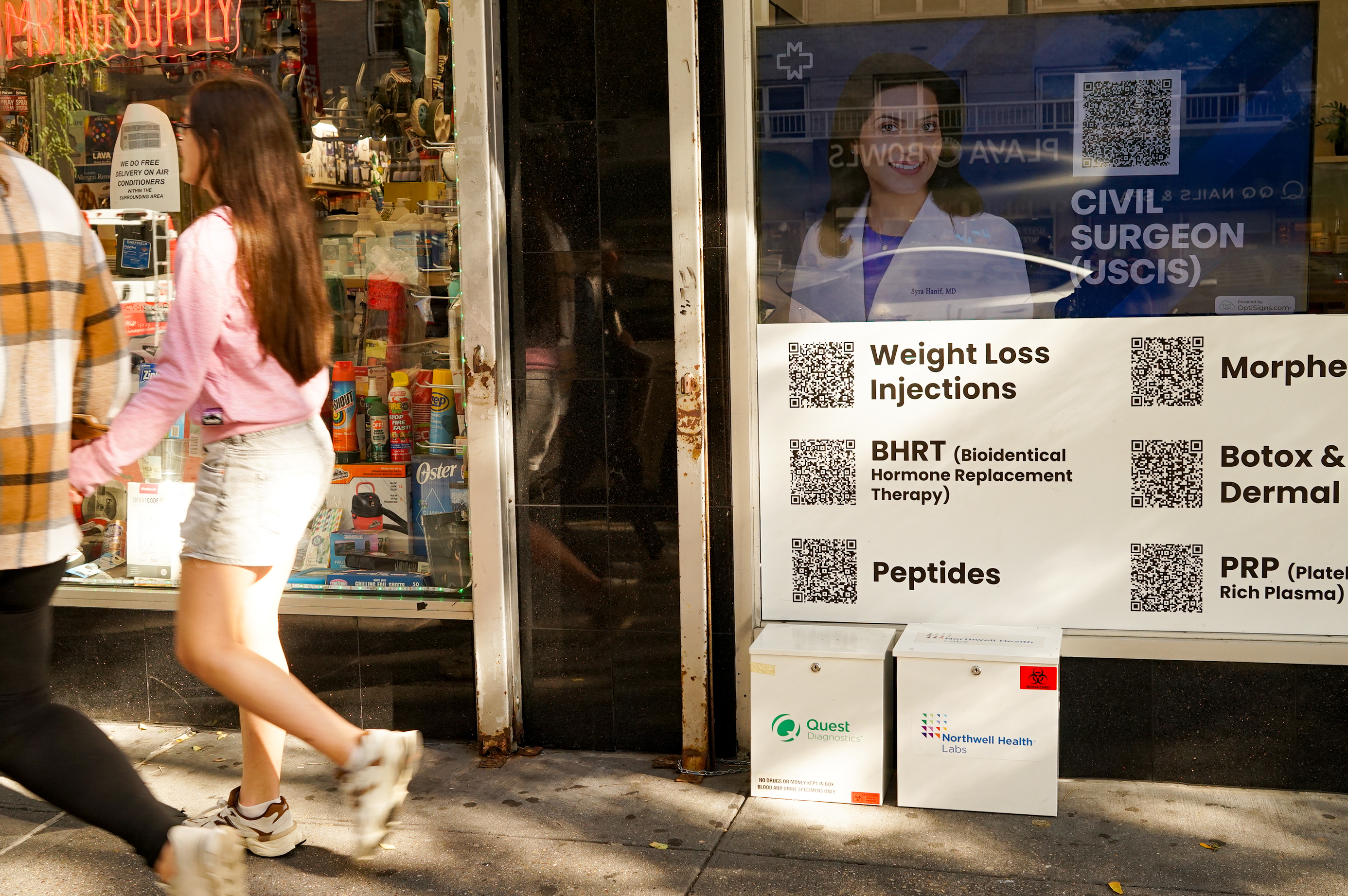
Experimental peptides are drawing interest from wellness influencers, clinicians and longevity businesses, while evidence that they work safely in people remains thin. The tension is now playing out in a federal proposal: a White House docket posted a temporary access policy on Oct. 14 that would let licensed pharmacies make and sell certain unapproved peptides. FDA scientists had cautioned against the move at a July meeting, saying the substances had not been adequately tested in clinical trials.
An FDA advisory panel voted to ease restrictions. Some new appointees have financial ties to the peptide industry, according to reporting. Department of Health and Human Services spokesperson Emily Hilliard said by email that all panel members meet FDA ethics requirements. Haleem Mohammed, a panel member and chief medical officer at peptide-selling men’s clinic Gameday Men’s Health, said at the FDA meeting, “I voted ‘yes’ for patient safety, the greater good, and medical freedom.”
That debate matters to consumers because peptide marketing often blurs the line between a biological substance, a proven medicine and a promising research lead. Here are four claims that deserve scrutiny, alongside a public-health concern that has more evidence behind it.
Peptides can be drugs
Gary Brecka, co-chair of the Make America Healthy Again Action committee, has argued on his podcast that peptides aren’t drugs. In the episode, he describes using them to “help regulate cortisol, improve circulation, all kinds of things.” But when a substance is used to treat or prevent a condition, or to change how the body functions, it fits the definition of a drug.
“Peptide” describes a broad class of substances made from the same building blocks as proteins, but smaller. The human body makes peptides, including insulin. When insulin is injected to regulate blood sugar, it’s a drug. Jacob Sherkow, a University of Illinois Urbana-Champaign law professor specializing in biotechnology, makes the distinction plainly: “Most of the drugs we have had some antecedent in nature. Heroin is natural. No one in their right mind would call it not a drug.”
Brecka did not respond to requests for comment. His public relations representative, Chris Woodward, said the health topics discussed on the podcast do not constitute medical advice.
“Natural” doesn’t establish safety
Peptide promoters have suggested that these substances are safe because they occur in nature. In one podcast clip, Brecka discusses the claim with Brigham Buhler, co-author of The Peptide Revolution and owner of a compounding pharmacy that sells peptides. Some promoters go further, saying that peptides made by the human body are inherently safe. Buhler did not respond to requests for comment.
BPC-157 illustrates how complicated that claim can be. Croatian scientists isolated the experimental peptide from stomach lining and named it “body protective compound.” Yet researchers have not found BPC in the human genome, said Katrin Svensson, a peptide scientist at Stanford University. That suggests people don’t produce it. Researchers in Taiwan have proposed that stomach microbes make it, according to Undark magazine.
Even a substance found in nature can be harmful. “Natural things can be toxic,” Svensson said. People have died after taking too much insulin, and a drug with an established safety record can still cause side effects. Controlled trials help researchers measure both benefits and harms, including effects that may take time to emerge, such as liver damage, or that become serious for people with particular health conditions.
The FDA is weighing lower restrictions on BPC-157 and five other experimental peptides. None has FDA approval, and the substances have not been through high-quality clinical trials. Svensson’s lab studies peptides she hopes to develop as medicines; she is enthusiastic about their potential, but says, “you need to show they’re not harmful.”
Treatment claims run ahead of trials
Kris Wusterhausen, a new member of the FDA advisory panel, has said BPC-157 “can reduce [acid] reflux disease” and treat “neurologic disorders.” He founded an antiaging company that sells the peptide and promotes “clinically guided peptide treatments.” He did not respond to requests for comment.
Claims that experimental peptides can address muscle injuries, COVID, inflammatory bowel disease and other conditions are widespread. The clinical record is sparse. A summary published in 2005 described a small BPC-157 trial for inflammatory bowel disease, but omitted key information about the study’s methods. FDA scientists who reviewed the summary judged it “inadequate.”
A separate small study reported reduced knee pain in 14 of 16 patients. Without a control group, it cannot show that BPC-157 caused the improvement; participants might have improved for other reasons, or their pain might have eased with time.
A 2025 review of BPC-157 research on musculoskeletal injuries advised caution because evidence is lacking. Flynn McGuire, a physical rehabilitation doctor at the University of Utah and an author of the review, said personal stories of dramatic recovery are weaker evidence still. He has told patients he won’t prescribe BPC-157 until better studies are available. “People want new things quickly,” he said, “but medicine and science just don’t work fast.”
Laboratory findings can help researchers decide what to study next, but they can’t establish that a peptide is safe or effective in people. A result such as increased blood-vessel growth in a lab also leaves open the possibility of unwanted effects, including the growth of cancerous tissue. Many substances that look promising in early experiments fail in human trials.
Patents aren’t the missing ingredient
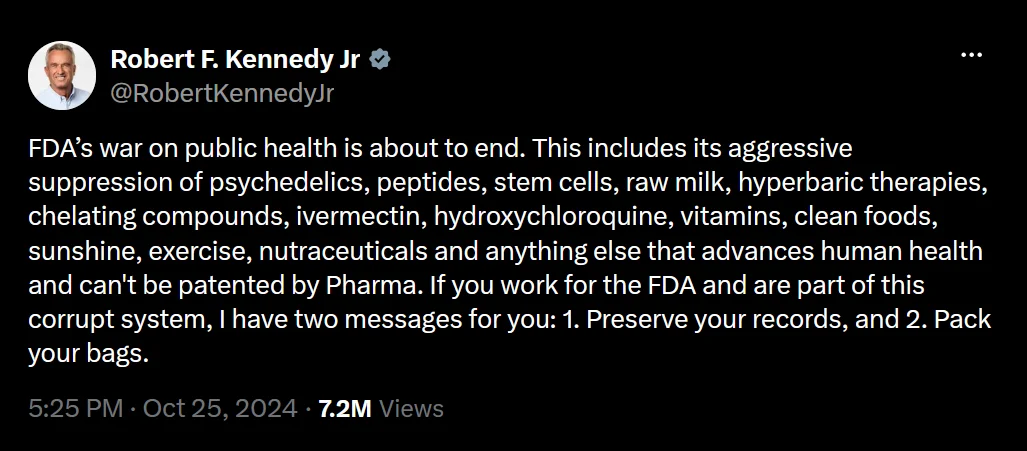
Before becoming HHS secretary, Robert F. Kennedy Jr. argued on X that the FDA was restricting peptides and other therapies because they couldn’t be patented. The idea also appears in online discussions: an analysis of Reddit posts about peptide therapy found users suggesting that pharmaceutical companies had sidelined peptides they couldn’t profit from.
But the U.S. Patent and Trademark Office database lists hundreds of peptide patents, and an early BPC-157 formulation patent is for sale. Sherkow explains that a naturally occurring substance itself may not qualify for a patent, while a modified version, a delivery method or a more stable formulation can. Those approaches are already being patented.
The commercial value of peptide patents is clear in the market for GLP-1 medicines, including Ozempic. Drugmakers are suing one another over patents involving these peptides. Morgan Stanley has projected that the market for the medicines could reach $190 billion within a decade.
Companies may still decide that clinical trials for other peptides aren’t worth the cost. Trials can require millions of dollars, and sponsors need evidence that a drug has a credible path to approval and a useful role alongside existing treatments. Companies may test candidates before making that commitment and stop when results disappoint, Svensson said.
Pinchas Cohen, a gerontology scientist at the University of Southern California, said investors withdrew from backing trials of MOTS-c, a peptide he helped discover, because they thought it overlapped with GLP-1 medicines. “Investors felt we couldn’t compete with that,” he said.
Making unapproved peptides easier to sell through compounding pharmacies could further weaken the incentive to fund trials, researchers say. The pharmaceutical trade organization PhRMA urged the FDA not to ease restrictions, arguing in a letter that doing so would “erode incentives for manufacturers to undertake the substantial time and cost required for FDA approval.”
The health concerns are real; the evidence still matters
Kennedy and other MAHA leaders have pointed to genuine strains in the U.S. health system. The country spends more per person on health care than any other nation, according to comparative spending data, yet its life expectancy ranks below that of other wealthy nations. Drug costs are a particular burden: in a KFF poll, six in 10 U.S. adults said they worried about affording prescription medicines, and four in 10 said they had skipped doses or taken other steps because of the price.
Researchers have proposed ways to address those problems, including curbing drug monopolies and improving access to healthy food. Those goals don’t resolve the central question for experimental peptides: whether a specific substance helps patients enough to justify its risks. Clinical trials take time, but they’re how that question gets answered.
KFF Health News is a national newsroom that produces in-depth journalism about health issues and is one of the core operating programs at KFF—an independent source of health policy research, polling, and journalism. Learn more about KFF.This article first appeared on KFF Health News and is republished here under a Creative Commons Attribution-NonCommercial-NoDerivatives 4.0 International License.



Discussion
Sign in to join the discussion.