A delayed U.S. launch sent some lung cancer patients to China for sunvozertinib, highlighting gaps in trial access and drug development.

For Debbie Doppelt, access to a promising cancer drug depended on a plane ticket to Shanghai. Her experience points to a growing tension in biotech: Chinese firms are advancing some treatments faster than the U.S. system can make them available, while patients with advanced disease can’t wait for the industry or politics to catch up.
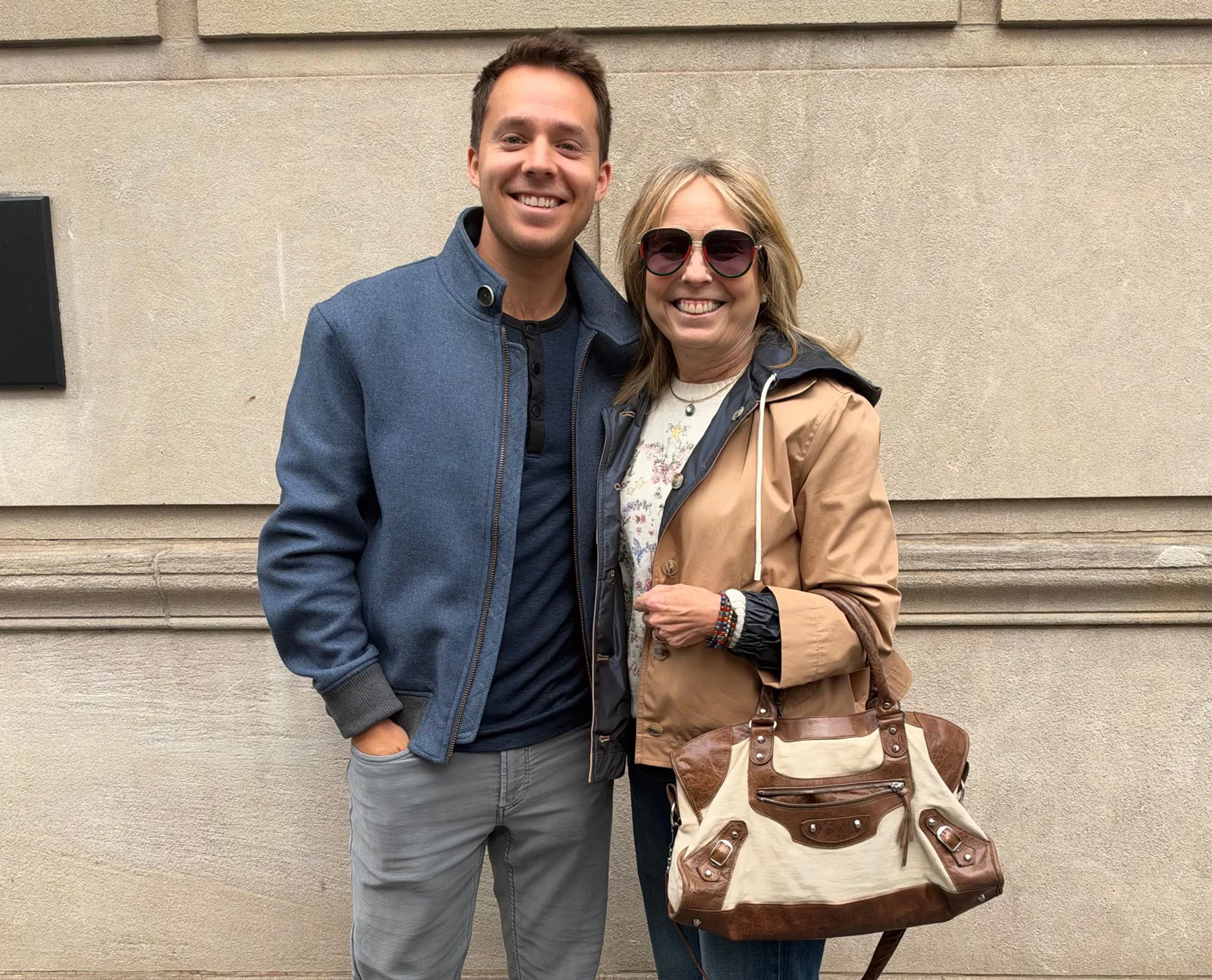
Doppelt, a 60-year-old Manhattan jeweler, has a form of lung cancer associated with a mutation that sunvozertinib targets. The drug, developed by Shanghai-based Dizal Pharmaceutical, was approved in China in 2023. In January 2025, it wasn’t approved by the U.S. Food and Drug Administration, and Doppelt couldn’t enter a relevant clinical trial. Her cancer had spread to her brain despite chemotherapy and surgery.
Her son, Max Doppelt, had coordinated her care since her diagnosis in 2023. A doctor told him that sunvozertinib could be bought at a pharmacy in China. The family contacted people they knew, and one of them obtained a small supply through a contact in the country. Max later flew to Shanghai and returned with 26 boxes, which he said cost about $10,000.
A treatment gap with real consequences
The available U.S. options didn’t give the family confidence. Amivantamab, approved by the FDA in 2024 for the mutation driving Doppelt’s tumor, raised concerns for Max about toxicity and its ability to reach cancer in the brain. She also tried to qualify for a zipalertinib trial at Memorial Sloan Kettering Cancer Center, where she was receiving care. Slight lung scarring made her ineligible.
Sunvozertinib was being tested in the United States, but the trial available to her was late-stage and gave half its participants chemotherapy alone. For a cancer that had already progressed through chemotherapy, that was not an acceptable risk to the family.
Max said he knows of at least 30 Americans who have gone to China for the medicine. No organization or doctor, he said, is directing patients there; information spreads through personal networks. The FDA licensed sunvozertinib in July 2025, but the drug still wasn’t on the U.S. market as of mid-October that year. AstraZeneca signed an agreement with Dizal on Sept. 1 to distribute it worldwide and said it planned to make the drug available in the United States by early 2027.
Doppelt has responded well so far. About 19 months after starting treatment, her cancer remained mostly controlled, with some radiation and dose adjustments. That result doesn’t guarantee the drug will keep working: Max expects the cancer could eventually find a way around it. If the next useful treatment is in China, he said, he’ll do everything he can to get her there.
China’s role is changing drug development
The Doppelt family’s experience sits within a broader shift. China has moved from a reputation centered on drug ingredients and generic medicines to a major center for biotech research. It accounted for as much as 46% of new drugs tested worldwide in 2025, according to Goldman Sachs. U.S. pharmaceutical companies are running trials there and striking large agreements with Chinese firms to develop and market medicines.
China is also drawing patients from the United States, Europe and elsewhere to clinical trials for CAR-T therapies. The country has become a leading center for this form of treatment, which modifies immune cells to attack cancer. For patients, overseas trials can offer access to experimental approaches that aren’t available at home. For companies, China has become a place to move early research into human testing quickly.
Sam Rasty, who leads the biotech company FynderBio, said China’s weak performance in vaccine and drug development during the COVID-19 pandemic prompted a sweeping overhaul of the sector. Investment now flows heavily into early clinical research in China and Australia, where trial systems can support first-in-human studies faster than the U.S. process, he said.
Speed is changing how American companies behave, too. Steve Potts, CEO of Breakthru Medicine, said U.S. biotech firms have become more guarded about sharing early research at conferences and funding meetings, fearing competitors may move their ideas into trials faster. At a meeting he attended in May, nearly all 60 biotech CEOs present planned to conduct phase 1 trials in Australia, Europe or China. Five to 10 years ago, Potts said, most would have run those studies in the United States.
Calls to speed trials meet calls for limits
The debate has both a practical and a political dimension. In September, Heidi Overton, President Donald Trump’s nominee to lead the FDA, described the agency’s requirements as “slow and prohibitive” and warned that overseas trials could weaken U.S. health security. She said she would continue Operation TrialBlazer, launched by the administration in June to speed some FDA processes and attract more clinical trials to the United States.
Department of Health and Human Services spokesperson Emily Hilliard said the initiative aims to accelerate trials and approvals so patients don’t feel driven to seek treatment abroad. She added that obtaining medicine overseas for personal use is sometimes legal, while the FDA cautions patients about possible safety and quality risks outside the U.S. regulatory system.
At the same time, some members of Congress want tighter controls on Chinese biotech ties. In June, Rep. John Moolenaar, a Michigan Republican who chairs the House Select Committee on the Chinese Communist Party, co-sponsored a bill with Rep. Debbie Dingell, a Michigan Democrat. It would require Treasury Department clearance for U.S. pharmaceutical deals with Chinese companies.
Others argue that restricting scientific exchange could slow the search for treatments. Peter Kolchinsky, managing partner of RA Capital Management, which holds Chinese biotech investments, said the countries can cooperate on cancer research even when they compete elsewhere. Max Doppelt likewise wants the United States to develop the drugs his mother needs, but opposes efforts to shut Chinese companies out of biotech.
Trial matching offers another route
Trying to find options for his mother also led Max, a 30-year-old computer engineer, to start a company. He left his technology job about a year ago to build an AI service that combines information from research and drug company websites with a patient’s health records to identify relevant clinical trials. About 300 people have used the app so far, all of them lung cancer patients like his mother. He doesn’t charge them.
Trial matching may help address a persistent enrollment problem: about 7% of U.S. cancer patients participate in clinical trials. Similar tools are being used by drug companies and health systems to find eligible participants. Paradigm Health CEO Kent Thoelke has said that increasing enrollment would also support the U.S. drug industry.
The app can surface possibilities, but a match is not a promise of benefit. Max said sunvozertinib appears to help about half of the patients who take it. One 70-year-old woman he assisted obtained a six-month supply from China, but learned after three months that her cancer had spread. She asked KFF Health News not to identify her to protect her sensitive health information.
For Doppelt, the next choices may include a U.S. trial of firmonertinib, a drug approved in China in 2021, or CAR-T research from the University of Colorado. Kyle Concannon, who leads the Colorado team, said regulatory uncertainty has slowed development. New methods for measuring toxicity and how treatments move through tissue can reveal potential harms, but also add time, cost and risk. He noted that the alternative to a new medicine for someone with lung cancer may be death from the disease.
Doppelt has continued working through treatment and said she is grateful for her family, friends and ability to afford care. Her story shows how the pace of drug development and the availability of trials can shape a patient’s choices long before a medicine reaches the U.S. market. Faster domestic research and better trial matching could reduce those gaps, but for patients facing advanced cancer, access to a treatment already available elsewhere remains an immediate question.
KFF Health News is a national newsroom that produces in-depth journalism about health issues and is one of the core operating programs at KFF—an independent source of health policy research, polling, and journalism. Learn more about KFF.This article first appeared on KFF Health News and is republished here under a Creative Commons Attribution-NonCommercial-NoDerivatives 4.0 International License.



Discussion
Sign in to join the discussion.