After missing Kona’s bike cutoff by three minutes, Bob Plant is adjusting his training and recovery while staying committed to movement.
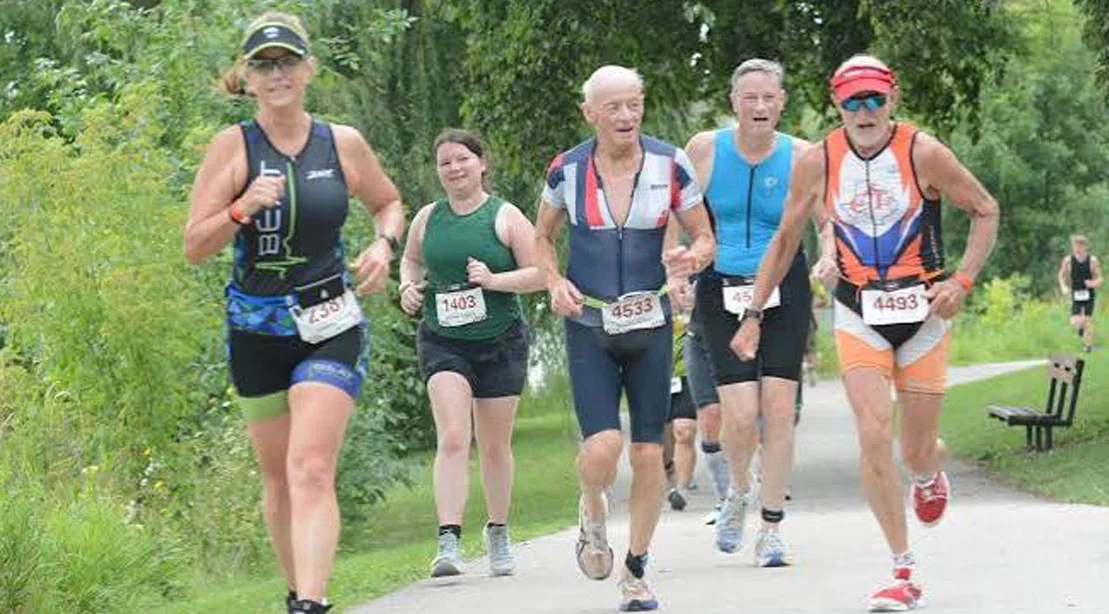
Bob Plant’s 10th Ironman World Championship in Kona ended three minutes beyond the bike cutoff. At 83, with seven age-group podium finishes in Kona and 20 USA Triathlon national titles behind him, he could have treated that result as a verdict on what his body can do. He took it as information.
Severe cramps in his quadriceps and hamstrings slowed him on the bike, and repeated chain problems forced him to stop. Plant suspects he hadn’t taken in enough sodium. By the time he reached the second transition, the cutoff had passed. His first missed Ironman cutoff was also his first DNF.
“I just turn the page,” Plant told Muscle & Fitness. “I’ve learned something, and I’m ready to get going again.”
That response captures the balance behind a career spanning more than four decades: Plant still cares about competing, but he has learned that staying in sport means managing effort as carefully as ambition. The Kona result stung, yet it didn’t erase his belief that he prepared as he usually does for Hawaii. Sometimes, he said, “Stuff happens like that. You have to accept it and learn from the experience.”
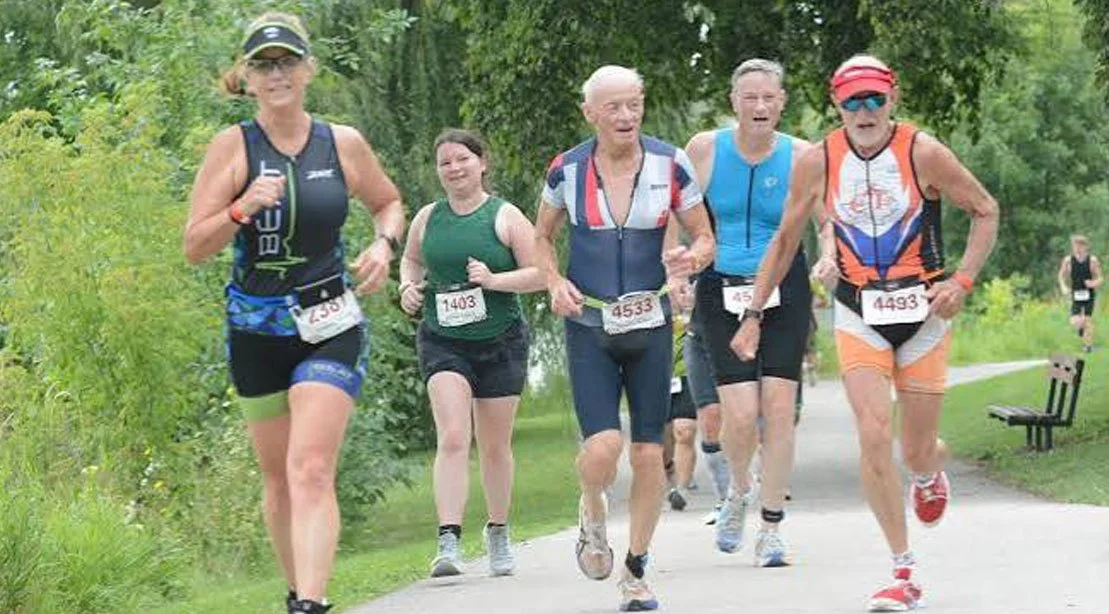
Training for the years ahead
Plant calls himself a “minimalist trainer,” an approach that may sound surprising for someone who takes on an Ironman. His current week typically includes two sessions in each discipline: swimming, cycling and running. He also protects one full rest day, every week.
“I take one day completely off, whether I need it or not,” he said. Without that break, he knows he’ll feel its absence a couple of days later.
For Plant, the central change with age is recovery. He believes he can still do many of the same physical activities he could a decade ago, but the time needed afterward has grown. Instead of bouncing back in a day, he may need two or three.
That calculation has reshaped his workouts. Plant no longer does speed training, judging the injury risk and extra strain to be a poor trade for the possible gains. He focuses on endurance and pays close attention to early signs that he needs to ease off. The aim is to keep training challenging without letting fatigue build until his body forces a stop.
Rest, in that sense, is part of the work. “That’s when you get strong—is when you rest,” he said. Recovery gives the body a chance to repair and adapt to hard sessions.
Kona has added another lesson. Previous finishes had given Plant years of experience with the course and conditions, but that history couldn’t prevent cramps or a troublesome chain. He now has fresh details to account for as he considers future races. His instinct is still to adjust and continue.
Regaining strength, not chasing a number
Plant sees one gap in his current routine clearly: regular strength training. Before the pandemic, he went to the gym as often as three times a week, sometimes lifting after a run. When gym access disappeared during COVID, the habit never fully came back.
He estimates that he has lost about seven pounds of muscle, though he says age may also be part of the change. The more telling difference is practical: his legs have less power than they did five years ago. Core work, stretching and home exercise remain in his routine, but they haven’t replaced the resistance training he used to do.
Plant plans to return to lifting during the winter. The goal isn’t to test a maximum or chase heavier weights. It’s to preserve the strength that supports his running, riding and everyday independence. His experience points to a simple cost of stopping: “You stop doing something that you’ve been doing for a while, and you can tell the difference,” he said. “No doubt about it.”
A full workday and a reason to keep moving
Training takes place alongside a full-time dental practice. Plant has worked as a dentist for 55 years, and four days a week can keep him at the office from around 7 a.m. until after 5 p.m. He often trains after work.
That schedule limits his available hours, but Plant thinks it also helps keep his training in check. His fitness, in turn, gives him the physical and mental stamina to stay attentive to patients through a long day. As he joked, “You just can’t say, ‘Oh, I’m going to do an average job today.’”
He knows how easy it is to get home, settle into a chair and postpone exercise. He also knows what happens when a regular practice falls away: the change in strength and capability becomes noticeable. For him, that’s a reason to find an activity sustainable enough to keep doing.
Plant doesn’t expect people to copy his Ironman schedule. He encourages them to walk, try a 5K or start lifting—whatever feels achievable and enjoyable. When people tell him they’ve begun exercising or completed a race, their progress matters to him because it shows that his example can help someone take a first step without signing up for 140.6 miles.
“If I can do it at my age, surely you can do something,” he said. “I just encourage them to somehow look at the possibilities.”
Movement has value beyond finishing times, Plant believes. Training gives him confidence in his ability to tolerate discomfort, respond to setbacks and handle difficulties outside sport. That confidence may be one reason a three-minute cutoff didn’t end his appetite for competition.
“It gives you confidence,” he said. “You can handle an Ironman or whatever, you can handle other things in your life that may have seemed big before, but now they’re not.”
Plant would have preferred to finish Kona. He thought he could have continued after reaching transition, but the cutoff ended the day. He accepted the result, took lessons from the cramps and mechanical problems, and turned his attention to what comes next.
“I’ll continue as long as I can,” he said. “As long as it’s fun.”
A longevity workout inspired by Plant
This 35–40-minute session emphasizes lower-body strength, core stability and aerobic capacity without making every interval a maximal effort. It requires dumbbells or kettlebells, a bench or box, and a cardio machine or open space.
Warmup: 5 minutes
Move continuously at an easy pace:
- March or easy bike: 1 minute
- Bodyweight squat: 10 reps
- Reverse lunge: 6 per side
- Hip hinge: 10 reps
- Arm circle: 10 in each direction
- Calf raise: 15 reps
Repeat once. The warmup should leave you feeling ready to work, not worn out—a useful reflection of Plant’s emphasis on listening to the body.
Strength and stability: 15 minutes
Complete three rounds, resting 60 seconds between rounds:
- Goblet squat: 10 reps
- Step-up: 8 reps per leg
- Dumbbell Romanian deadlift: 10 reps
- One-arm dumbbell row: 10 reps per side
- Standing calf raise: 15 reps
- Plank: 30–45 seconds
Plant connects his time away from the gym with a noticeable decline in muscle and leg power, and plans to prioritize resistance training again. “If you don’t have strong legs, that’s the key to life, isn’t it?” he said.
Sustainable endurance: 10–15 minutes
Choose a bike, rower, treadmill, elliptical or brisk outdoor walk. Begin with two minutes at an easy pace, continue for six to ten minutes at a steady conversational effort, then finish with two easy minutes.
Core and mobility: 5 minutes
Complete two rounds:
- Dead bug: 8 per side
- Bird dog: 8 per side
- Hip-flexor stretch: 30 seconds per side
- Hamstring stretch: 30 seconds per side
Plant’s next chapter isn’t defined by erasing one missed cutoff. It’s defined by making room for recovery, rebuilding useful strength and staying active for as long as the sport remains enjoyable.



Discussion
Sign in to join the discussion.