Classic Physique competitor Ethan Gohari shares cues for using a single-arm cable pulldown to target the lats with control and steady tension.
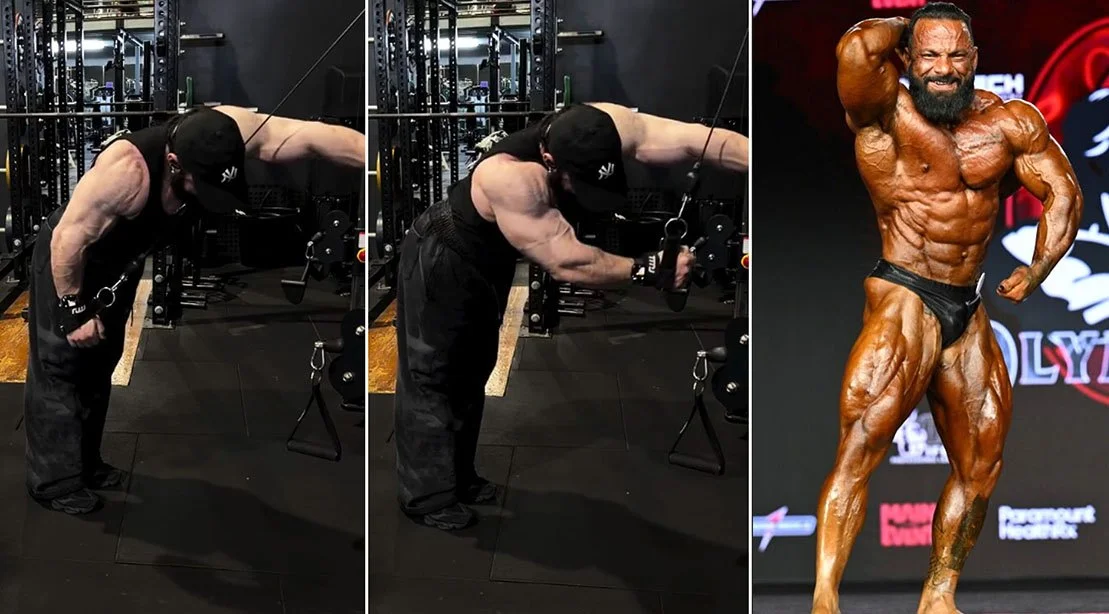
For Ethan Gohari, a wider back starts with how the cable moves, not how much weight is on the stack. The Australian bodybuilder is using a single-arm straight-arm pulldown as he prepares for the coming season, pointing to its steady tension and the focus it brings to each side of the back. His emphasis is on controlling the movement and feeling the target muscle work, rather than treating the exercise as a test of how much weight he can pull.
That distinction matters because cable exercises can look simple while still being easy to perform poorly. A load that’s too heavy can turn a deliberate lat movement into a swing driven by the torso and arms. Gohari’s approach puts the quality of each repetition first: the cable should provide resistance, while the lifter controls the path.
Gohari became the first Australian athlete to win a professional Classic Physique contest and the first bodybuilder from Australia to compete in the category at the Olympia. In a recent Instagram post, he said the movement can be done in most gyms and offers a strong lat connection when set up correctly. A standard cable station is all the equipment it requires.
That accessibility is part of the exercise’s appeal. A cable station is common gym equipment, and a single handle lets the lifter work one side at a time without needing a specialized machine. But access doesn’t guarantee good execution: cable height, distance from the stack, stance, and control all affect how the movement feels.
Why use a single arm?
The pulldown isolates the latissimus dorsi, the broad muscles along either side of the back. In bodybuilding, developed lats help create a wider upper-body silhouette and emphasize the taper toward the waist. The muscle also contributes to pulling actions, so the exercise has a clear training purpose beyond its visual effect.
Working one side at a time can also make it easier to direct effort into the target muscle. “Working one side at a time makes it much easier to focus on actually driving through the lat rather than just moving the weight,” Gohari said. The cable keeps resistance present through the movement, including as the arm returns and the lat lengthens.
That continuous pull is useful, but it doesn’t make every repetition automatically effective. A cable can maintain resistance through a range of motion, while the lifter still has to keep the shoulder and torso in positions that let the lat do the work. The single-arm setup offers a chance to pay attention to one side, one elbow path, and one controlled return at a time.
There’s also a practical reason to train each side separately: it gives the lifter a clearer opportunity to notice whether one arm is taking over or whether the body is shifting to help finish the rep. That observation isn’t a diagnosis of imbalance. It’s simply feedback about what’s happening during the set.
Gohari’s technique cues
Step back from the cable so you’re leaning slightly into its pull, then hold the attachment. Gohari’s cue is to send the elbow down toward the floor; the hand should act mainly as a hook. As you pull, guide the elbow toward the hip and contract the lat. That cue shifts attention away from curling the handle toward the body and toward moving the upper arm through the pull.
Keep the setup controlled. A slight lean can help you work against the cable’s direction, but turning it into a large body swing changes the movement. The goal is a repeatable position that lets the arm travel while the torso stays quiet enough to keep the lat involved.
Control the return as well. Let the lat lengthen while keeping the shoulder position steady and down. Gohari says swinging, bending the elbow too much, or shifting the whole body to move the load are signs the weight is too heavy. Reduce it until you can keep the path smooth in both directions.
That return is easy to rush. Yet the controlled lowering phase is part of the repetition: if the cable pulls the arm back abruptly, the lifter gives up some control over the movement and the muscle’s lengthening position. A lighter load can make it easier to maintain that control. No dramatic setup required.
That controlled stretch and focused elbow drive are the point of the exercise. Gohari’s approach favors a deliberate rep that keeps tension on the lat over a heavier pull that recruits the rest of the body. Here’s the thing: the best load for this movement is the one that allows those cues to hold from the first repetition to the last.
What the exercise can—and can’t—tell you
A single-arm pulldown is one tool for back training, and Gohari’s demonstration offers a practical example of how he uses it. It doesn’t establish that this movement is the only way to build the lats, or that every lifter will feel the same response. Exercise choice depends on the person, the available equipment, and how well the movement can be performed.
If you’re working in this space, the useful takeaway is less about copying an elite bodybuilder’s routine wholesale and more about borrowing a cue that has a clear purpose: drive the elbow, keep the return controlled, and lower the weight when your body starts compensating. This is more significant than it looks for anyone who tends to chase load at the expense of a consistent rep.
And yet, a focused exercise won’t replace a broader training plan. The pulldown can help a lifter concentrate on the lats, while other movements and overall programming determine how it fits into a session. Gohari’s post is best read as a technique demonstration, not a claim that one cable variation guarantees a wider back.
(And this is the part most people overlook.) A movement that works in most gyms is only useful if the lifter can set it up and repeat it with control. The equipment is simple; the discipline is in resisting the urge to turn every set into a heavier one.
Follow Ethan Gohari on Instagram: visit his profile.



Discussion
Sign in to join the discussion.