An NYU study links GLP-1 use to a 7% higher hair-loss risk among men predisposed to male-pattern baldness.
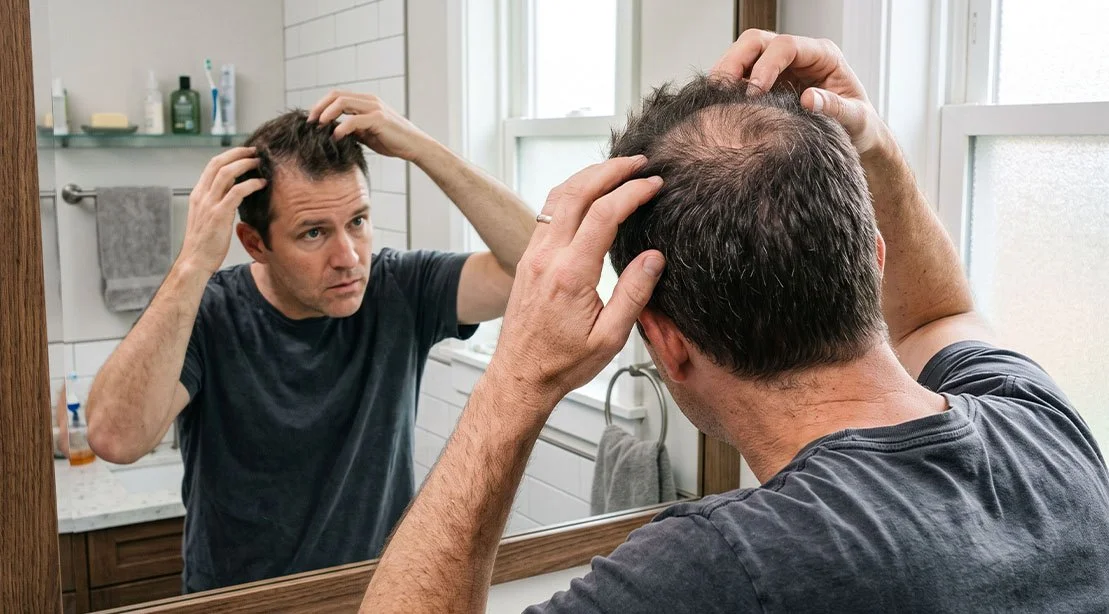
A genetic predisposition may help explain why some men taking GLP-1 weight-loss drugs report thinning hair. NYU Langone Health researchers found that men predisposed to androgenetic alopecia had a 7% higher risk of hair loss while using these medications than men without that predisposition. The result points to a possible difference in risk between patients, rather than showing that the drugs cause hair loss in every user. That distinction matters: a relative increase doesn’t tell readers how often hair loss occurred in either group or how severe it was.
Genetics may shape the risk
Published in the Journal of Investigative Dermatology, the study analyzed genetic data from more than 200,000 men, most of them white. Researchers found that men with androgenetic alopecia were more likely to have elevated levels of GLP-1 receptor proteins while taking the drugs. The increased risk remained after the team accounted for other hair-loss factors, including hypertension and high blood pressure. Those adjustments help test whether the association persists alongside factors already considered relevant, but they can’t rule out every possible explanation.
Androgenetic alopecia is the inherited form of hair loss commonly called male-pattern baldness. Its presence gives researchers a way to examine whether an existing genetic tendency might be associated with hair shedding during treatment. The study’s reported 7% increase is therefore a finding about a subgroup of men, not a general estimate that applies to every person taking a GLP-1 medication.
The finding adds a possible direct connection between GLP-1 treatment and hair loss to the existing theory that shedding can follow rapid weight loss. Weight changes can coincide with shifts in the body that affect hair growth, so the timing of shedding alone doesn’t establish which factor is responsible. The genetic association raises another possibility: some patients may have a susceptibility that affects their response to treatment. The study doesn’t settle how those explanations relate to one another.
The study focused on men, in part because more historical research data is available on male hair loss, though women may also be affected. That choice makes the analysis easier to conduct using existing data, but it narrows what readers can conclude. The findings can’t establish whether women face a similar genetic relationship, or whether the same pattern applies across groups with different hair-loss histories.
“Our study provides the first genetic link between GLP-1 use and an increased risk of male-pattern hair loss from androgenetic alopecia, an association long suspected but until now not shown scientifically,” said senior investigator Lynn Petukhova, PhD, an assistant professor at NYU Grossman School of Medicine.
This is more significant than it looks, but the word “link” carries limits. A genetic association can help researchers identify a pattern and frame the next questions; by itself, it doesn’t show that a medication directly triggers hair loss or explain the biological steps involved. The report also doesn’t specify how the 7% figure translates into an individual patient’s chance of noticing shedding. For someone weighing a possible side effect, that missing context matters.
What the finding could lead to
Petukhova said further research could establish whether screening patients for hair-loss risk before prescribing GLP-1 medications is useful. Such screening would need to do more than identify a genetic tendency: it would have to help clinicians and patients make a clearer decision than they can make from the association alone. Researchers would also need to understand how accurately a risk signal identifies people likely to experience hair loss, and whether that information changes care in a helpful way. The current study doesn’t answer those practical questions.
She also raised the possibility of pairing these drugs with hair-loss treatments such as minoxidil, though that approach would need to be tested. A proposed combination isn’t evidence that the treatment prevents medication-associated shedding. It would take further research to establish whether it works for this specific situation, which patients might benefit, and how the risks and benefits compare. For now, it’s a research direction rather than a care recommendation.
If you're working in this space, the next useful step is to separate the questions the study raises: whether the genetic association can be reproduced, whether it explains a direct drug effect, and whether any preventive approach changes outcomes. Similar studies often identify a pattern before they can establish its cause, so those questions may require different kinds of evidence. The first result is a reason to investigate, not a finished answer.
For now, the study identifies a genetic association rather than proving how the drugs cause hair loss. It also doesn’t establish that all patients with androgenetic alopecia will experience shedding while taking GLP-1 medications. That said, the result gives researchers a specific group and a possible biological clue to examine, rather than leaving the discussion solely with the broader theory that rapid weight loss can be followed by hair shedding.
And yet. The study’s limits are part of its value: they show where the evidence stops and what needs to be tested next. More research could clarify whether the association holds across different populations, whether it applies to women, and whether a genetic signal can guide prevention. Until then, patients and clinicians have a reported association to discuss, with no demonstrated screening strategy or proven hair-loss prevention approach established by this study.



Discussion
Sign in to join the discussion.