Creatine Is Apparently Good for Everyone Now. The ...
New meta-analyses show this tried and true supp can benefit both men and women—but you still have to...
Read articleA 12-week study found creatine users gained lean tissue, with gains in both adults who exercised and those who skipped structured training.
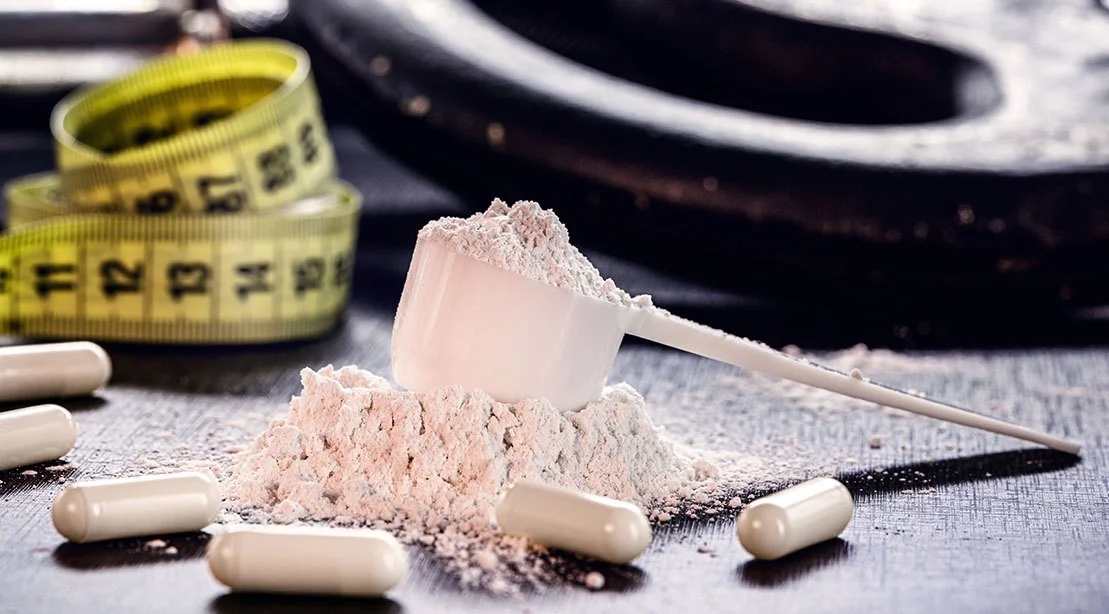
The most striking finding in a 12-week Texas A&M University study is that adults who took creatine gained lean tissue even without joining a structured exercise program. That result challenges the usual shorthand that creatine’s value depends on pairing it with organized training, though it doesn’t show that a supplement can replace physical activity. For middle-aged and older adults concerned about preserving muscle, the finding is intriguing; the study also found greater gains among participants who exercised.
Published in the Journal of the International Society of Sports Nutrition, the study enrolled men and women aged 45 to 65. Participants received creatine or a maltodextrin placebo and were assigned either to supervised exercise sessions or to a group without organized workouts. Questionnaires showed the supervised group accumulated more moderate-to-vigorous activity, offering a useful distinction: “no organized workouts” doesn’t necessarily mean no movement at all.
That detail matters when interpreting the results. The study compared supplementation under different activity conditions, but the groups weren’t simply “active” and “inactive” in every sense. Questionnaires provide context about activity, yet they don’t make the two groups identical apart from exercise supervision. The findings are best read as evidence that creatine may have contributed to changes in lean tissue in this study, not as proof that every adult taking it will gain muscle.

New meta-analyses show this tried and true supp can benefit both men and women—but you still have to...
Read articleParticipants taking creatine without structured training consumed two 5-gram doses daily. After 12 weeks, they had gained about 2.4 pounds of lean tissue on average. The placebo group, by comparison, lost nearly half a pound. The gap is notable, but the reported averages don’t tell readers how widely individual results varied or whether the gain translated into changes participants could feel in daily life.
The study report said creatine monohydrate, without exercise training or a diet intervention, increased lean tissue, strength and muscular endurance. It also reported favorable changes in selected blood lipids, HbA1c, and markers of cognitive function and memory. Those are several distinct outcomes, and they shouldn’t be collapsed into a single claim that creatine improves health across the board. The source doesn’t provide enough detail here to judge the size or practical importance of each change.
Lean tissue is a body-composition measure, while strength and endurance describe performance. Seeing changes across those categories makes the result more interesting than a shift in one measurement alone. Still, the study’s 12-week window can describe short-term effects; it can’t establish how long the changes last or whether they continue with ongoing use.
Creatine users in the supervised exercise group gained an average of 2.8 pounds of lean mass. They followed a modest calorie deficit and still added nearly three pounds of lean tissue while losing fat. Participants who exercised and took the placebo showed little change in lean mass. This is more significant than it looks: the result suggests the supplement’s possible contribution wasn’t limited to the group that skipped organized training.
Both creatine groups also saw a greater reduction in body-fat percentage than participants relying on exercise or diet alone, according to the study. Body-fat percentage is a relative measure, so a reported reduction doesn’t by itself explain exactly how much fat or total body weight changed. The comparison nevertheless points to a question readers may care about: whether creatine can help preserve or build lean tissue while someone is trying to reduce fat.
For people who exercise, the findings fit the familiar idea that supplementation may work alongside training rather than in place of it. For those who don’t follow a formal program, the reported lean-tissue gain raises a separate possibility. If you're working in this space, the distinction matters: supervised exercise, everyday activity, diet and supplementation can each shape the outcome, and this study tested them in combinations.
The findings point to a possible role for creatine in maintaining muscle as adults age, when lean mass can begin to decline. The authors concluded that supplementation, with or without exercise and diet intervention, may help middle-aged and older adults maintain muscle and strength while influencing selected health and cognitive markers. That conclusion is measured, and it should stay that way: the study offers a signal worth examining, not a guarantee of benefit for every person in this age range.
Here's the thing: a supplement that appears to help in the absence of structured workouts may be relevant to adults who find formal training difficult to maintain. But the study doesn’t establish why the non-exercising creatine group gained lean tissue, how durable the gains are, or how well the result applies beyond the participants studied. (And this is the part most people overlook.) A change in a study average is a starting point for understanding an effect, not a personalized forecast.
That said, the combination of reported lean-mass, strength and endurance changes gives researchers a reason to examine the result further. The practical question is whether those changes hold over longer periods and matter to function outside a study setting. For now, the clearest reading is modest: creatine was associated with better reported outcomes in this trial, and supervised exercise appeared to add to the lean-mass gains. A promising signal.

Discussion
Sign in to join the discussion.