KFF Health News’ Halloween haiku winners turn measles, dental bills and AI claim denials into darkly funny healthcare verse.
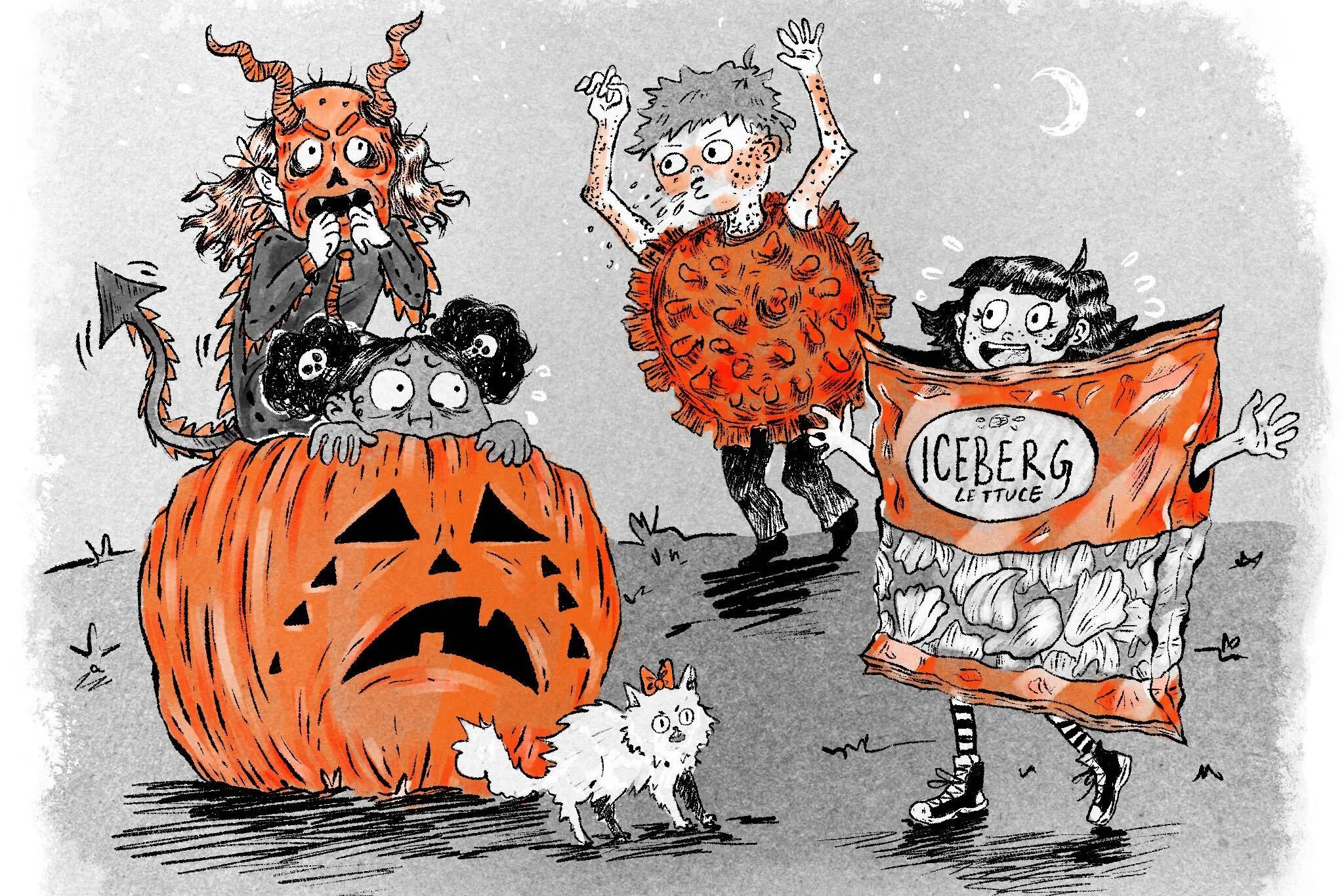
Measles, costly dental care and insurance claims rejected by AI supplied the scares in KFF Health News’ eighth annual Halloween haiku contest. The newsroom received nearly 80 healthcare-themed entries this season; three winning poems put familiar health system frustrations into Halloween verse.
The format is brief, but the concerns behind these entries aren’t. Each poem turns a complicated health issue into a compact image: a disease more unsettling than a carved pumpkin, a vampire unable to afford dental care, or a claim denied by a system with no human warmth. The humor gives the subjects a seasonal frame without making their consequences feel imaginary.
That’s part of the contest’s appeal. A haiku has little room for explanation, so the writer has to choose the detail that carries the weight. Here, that detail is often a familiar frustration made strange by Halloween.
First place
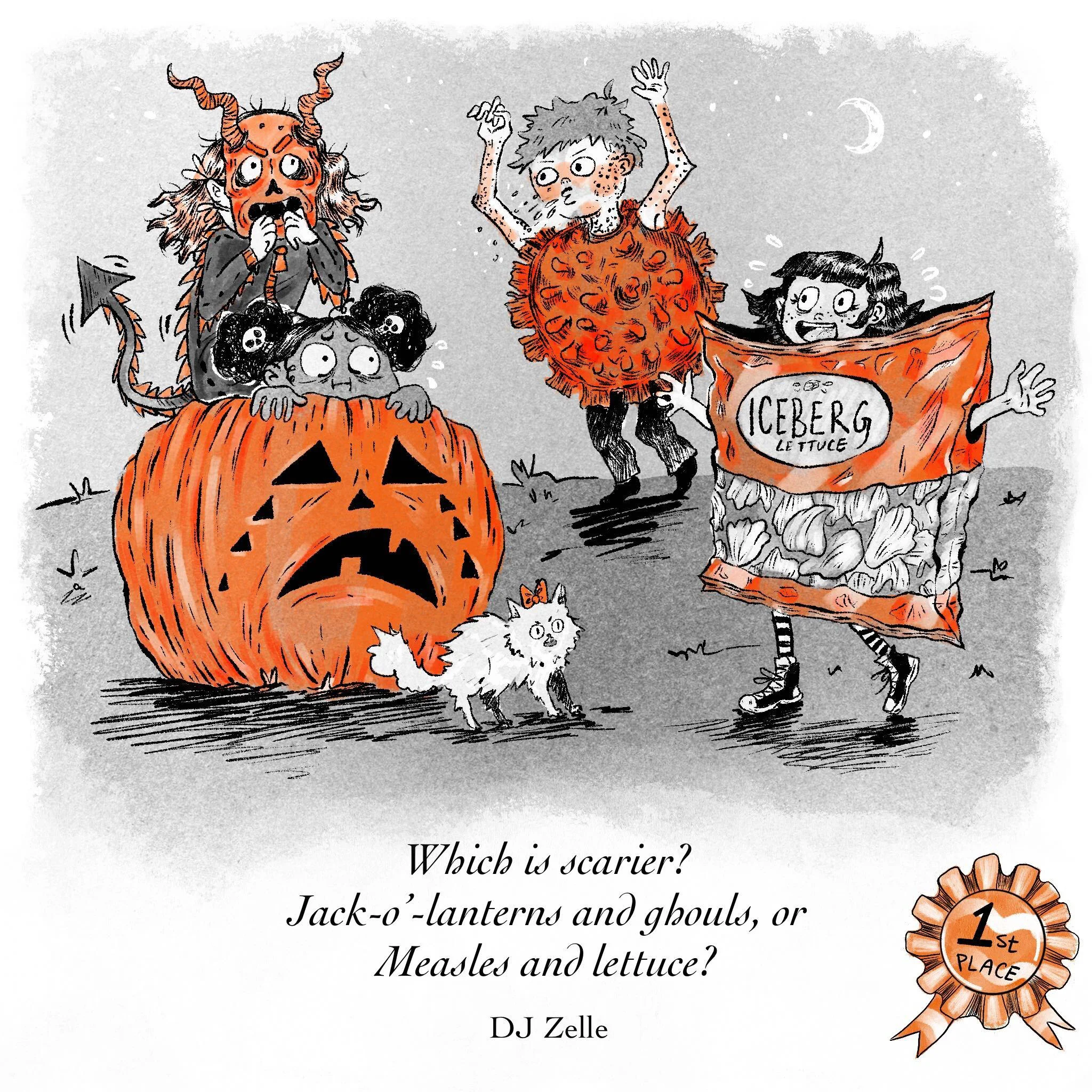
DJ Zelle’s winning poem sets familiar Halloween props against health scares that arrive outside the holiday. The question makes the reader weigh the theatrical fright of ghouls and carved pumpkins against the unease attached to measles and lettuce. That last pairing is deliberately abrupt: it brings disease and food into the same small frame, where the ordinary can feel unexpectedly threatening.
The poem doesn’t explain the risks or offer a public health lesson. Its point is the comparison itself. A three-line joke can’t capture the full complexity of health concerns, but it can show how quickly anxiety enters everyday life.
Second place
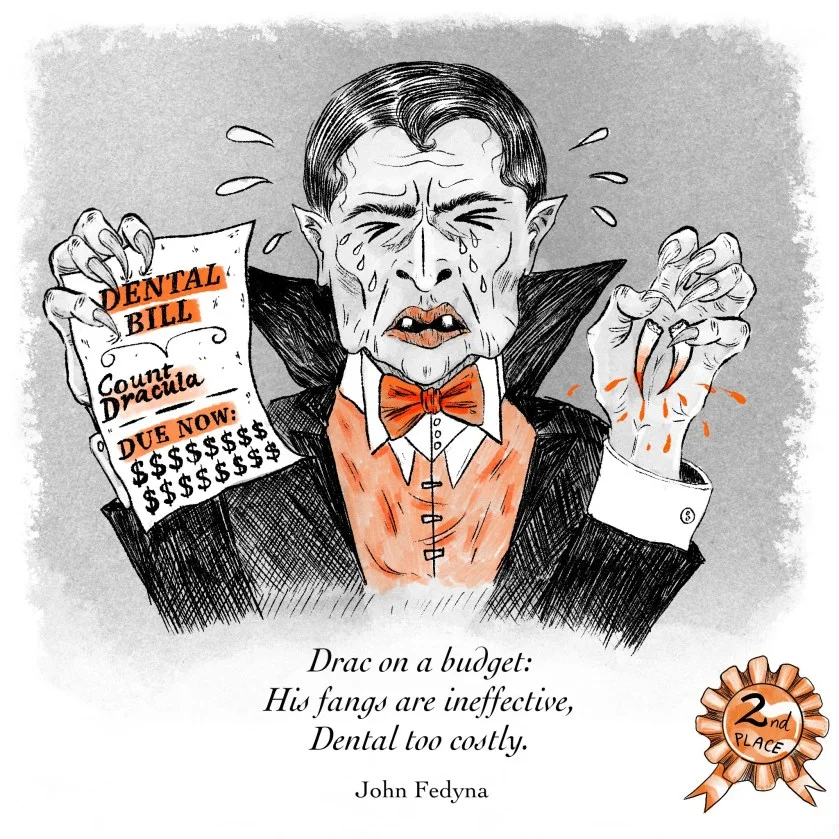
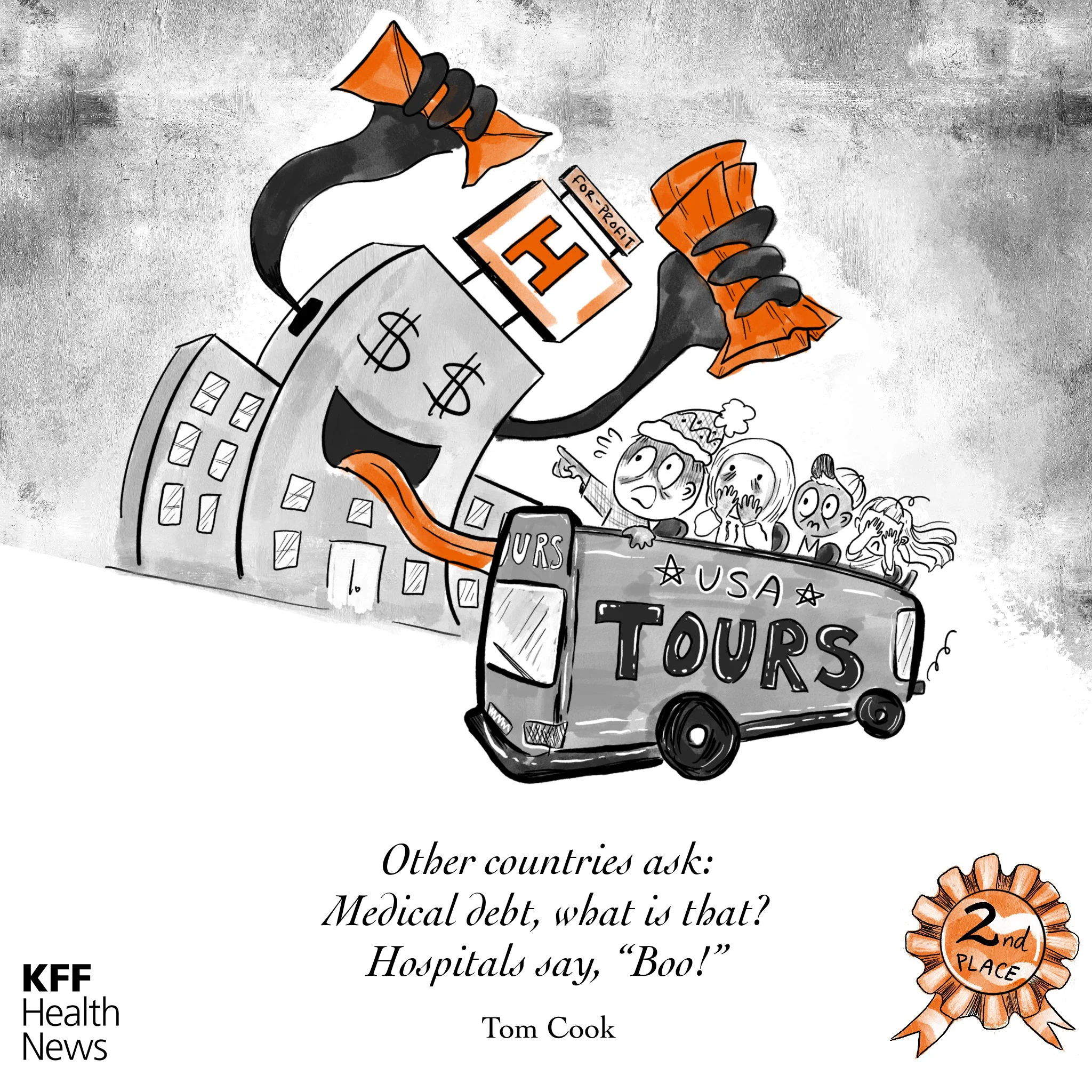
John Fedyna gives the vampire a practical problem: even a creature with famously capable teeth needs dental care. Counting coins makes the joke land, while the final line points to the real issue behind it. The poem’s monster is recognizable; the bill is, too.
The linked report’s title underscores a gap many patients encounter: having dental insurance doesn’t necessarily mean a visit will be affordable. Coverage can still leave people facing substantial bills, and that uncertainty may shape whether or when they seek care. The haiku reduces that tension to a comic image, but the cost question remains after the joke.
This is more significant than it looks. Dental costs can be easy to treat as a punchline because the problem is so familiar; the poem’s concise setup makes the financial strain hard to miss.
Third place
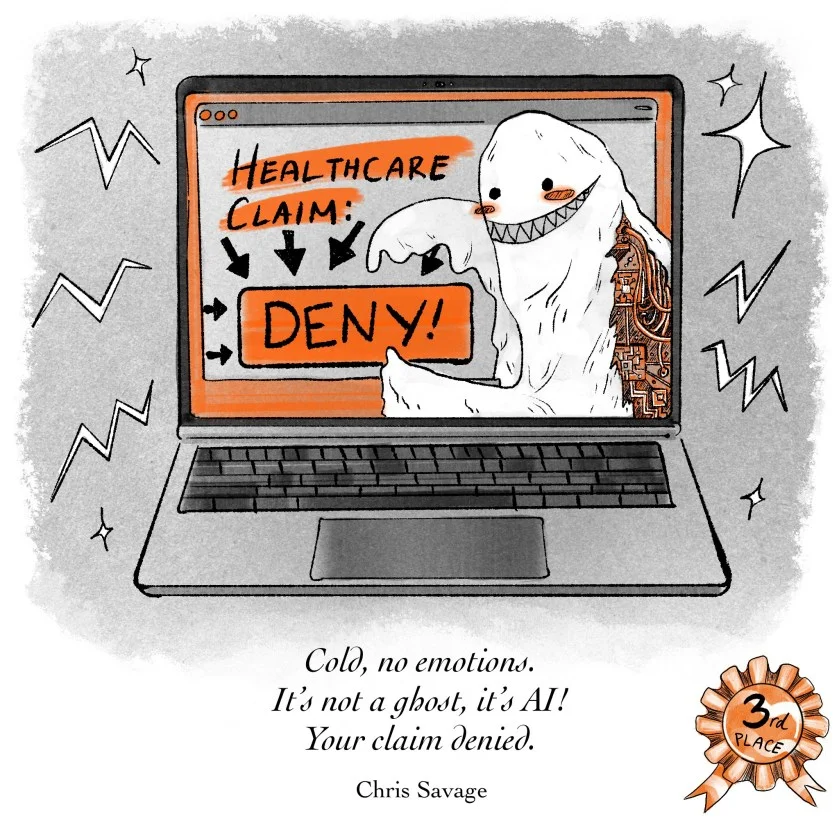
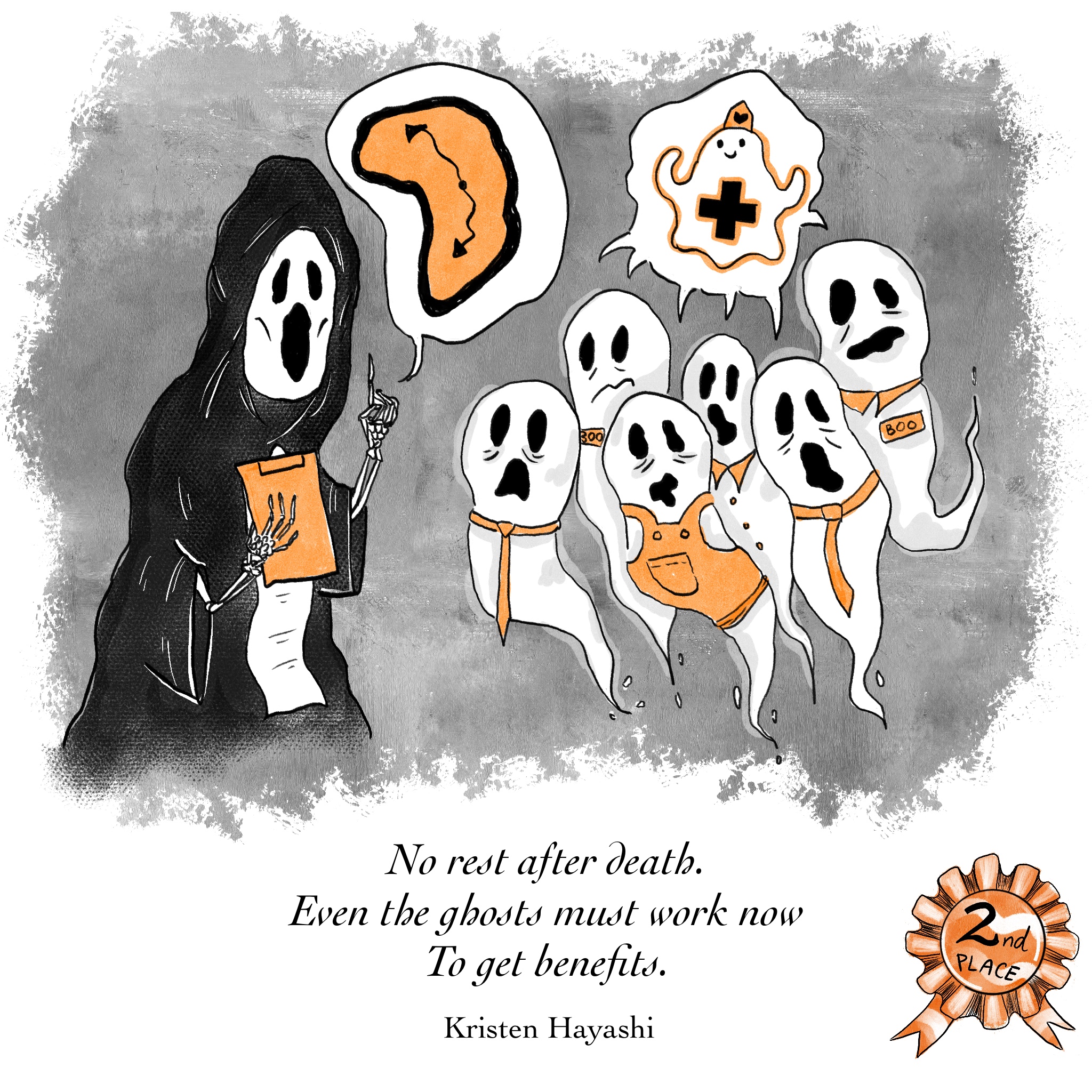
Chris Savage’s poem makes denial the punchline and the threat. The first line sounds like a description of a ghost, then the next lines redirect it toward artificial intelligence and an insurance decision. The sharp turn is the poem’s engine: the system seems supernatural because it can affect a person’s care while offering little sense of human understanding.
The entry draws on KFF Health News’ “Deadly Denials” series and a report about efforts in states to limit AI in insurance. The poem doesn’t claim that every automated decision is wrong; it captures the distrust that can arise when a consequential decision feels impersonal or difficult to challenge. (And this is the part most people overlook.) For someone facing a denied claim, the process behind the decision may matter as much as the result.
If you’re working in this space, the poem’s central question is plain: how does a person understand or contest a decision made with AI? The haiku doesn’t answer that. It gives the frustration a voice, and leaves the reader with the coldest word in the poem.
Denied.
Why healthcare makes such effective Halloween material
These three entries use different monsters, but they share a method: each takes an ordinary point of contact with the health system and gives it a Halloween twist. A health scare becomes more frightening than a costume; a dental bill stops a vampire; an insurance denial sounds like a ghost with no feeling. The familiar details do the work.
That approach suits a contest built around haiku. The form asks writers to compress an idea, and healthcare often supplies a ready-made tension between what people need and what they can afford, access or get approved. A short poem can’t stand in for reporting, but it can sharpen a question that longer coverage explores in depth.
There’s a limit to the joke, of course. A laugh doesn’t make a bill smaller or explain why a claim was rejected. And yet humor can make a difficult subject easier to recognize—and harder to dismiss as someone else’s problem.
The contest may be seasonal, but KFF Health News accepts haikus throughout the year for possible publication in its Morning Briefing. The invitation extends the project beyond Halloween: readers can send in short poems about healthcare concerns whenever they have an idea that fits the form. Send entries through the haiku submission page.
2025 Halloween Haiku Contest Winners
KFF Health News is a national newsroom producing in-depth health journalism and a core operating program at KFF, an independent source of health policy research, polling and journalism. Learn more about KFF.




This article first appeared on KFF Health News and is republished under a Creative Commons Attribution-NonCommercial-NoDerivatives 4.0 International License.


Discussion
Sign in to join the discussion.